
How to choose supplements that truly support your health
TL;DR
- Assess personal health needs and get bloodwork before buying any supplements.
- Verify third-party certifications and read labels carefully to ensure quality and safety.
- Supplements fill nutritional gaps—they're tools, not replacements for balanced diet and lifestyle.
Table of Contents
- Table of Contents
- Table of Contents
- Key Takeaways
- Assess your personal needs before supplement shopping
- Gather essential information: what smart supplement shoppers check
- Understand common supplement types and evidence for well-being
- Safety checks and red flags: what to avoid
- Consult experts and verify supplement quality
- Discover science-backed supplements from BioEssentials
Table of Contents
- Table of Contents
- Key Takeaways
- Assess your personal needs before supplement shopping
- Gather essential information: what smart supplement shoppers check
- Understand common supplement types and evidence for well-being
- Safety checks and red flags: what to avoid
- Consult experts and verify supplement quality
- Discover science-backed supplements from BioEssentials
Table of Contents
- Key Takeaways
- Assess your personal needs before supplement shopping
- Gather essential information: what smart supplement shoppers check
- Understand common supplement types and evidence for well-being
- Safety checks and red flags: what to avoid
- Consult experts and verify supplement quality
- Discover science-backed supplements from BioEssentials
Standing in a supplement aisle or scrolling through dozens of online product pages can feel genuinely paralyzing. Every bottle promises something extraordinary, yet the supplement market is largely unregulated before products hit shelves, leaving you to sort through bold claims with little official guidance. The good news is that choosing supplements wisely is absolutely a learnable skill. This guide walks you through a clear, step-by-step process so you can make safe, effective choices that actually match your personal health goals.
Key Takeaways
| Point | Details |
|---|---|
| Start with your needs | Evaluate your personal health profile and dietary gaps before buying supplements. |
| Scrutinize quality markers | Look for third-party testing, clear labeling, and science-backed ingredients. |
| Prioritize safety | Beware of hype, risky blends, and always consult a health professional. |
| Focus on holistic wellness | Supplements are tools, not replacements, for a balanced lifestyle. |
Assess your personal needs before supplement shopping
The single biggest mistake people make is buying supplements based on trends rather than their own biology. Before you spend a dollar, you need an honest picture of where your health actually stands.
Evaluating your nutritional needs through diet analysis, blood tests, and a review of your age, gender, activity level, and any chronic conditions is the only reliable starting point for choosing supplements that fill real gaps. A 45-year-old woman with low iron needs something completely different from a 30-year-old male athlete with a magnesium deficiency. Context is everything.
Common tests worth discussing with your doctor include panels for vitamin D, B12, ferritin, and magnesium. These nutrients are frequently low in adults who eat reasonably well, yet the deficiencies are invisible without testing. Supplements should fill verified gaps, not serve as a nutritional safety blanket.
Key factors to evaluate before buying:
- Age and biological sex
- Current diet quality and food restrictions
- Activity level and recovery demands
- Diagnosed conditions or medications
- Recent bloodwork or known deficiencies
Pro Tip: Keep a simple food diary for one week before your doctor’s appointment. It gives your provider concrete data to work with and often reveals nutrient gaps faster than guessing.
Gather essential information: what smart supplement shoppers check
With your unique needs mapped out, the next step is learning how to read a supplement label like a professional. This is where most people skip critical steps.

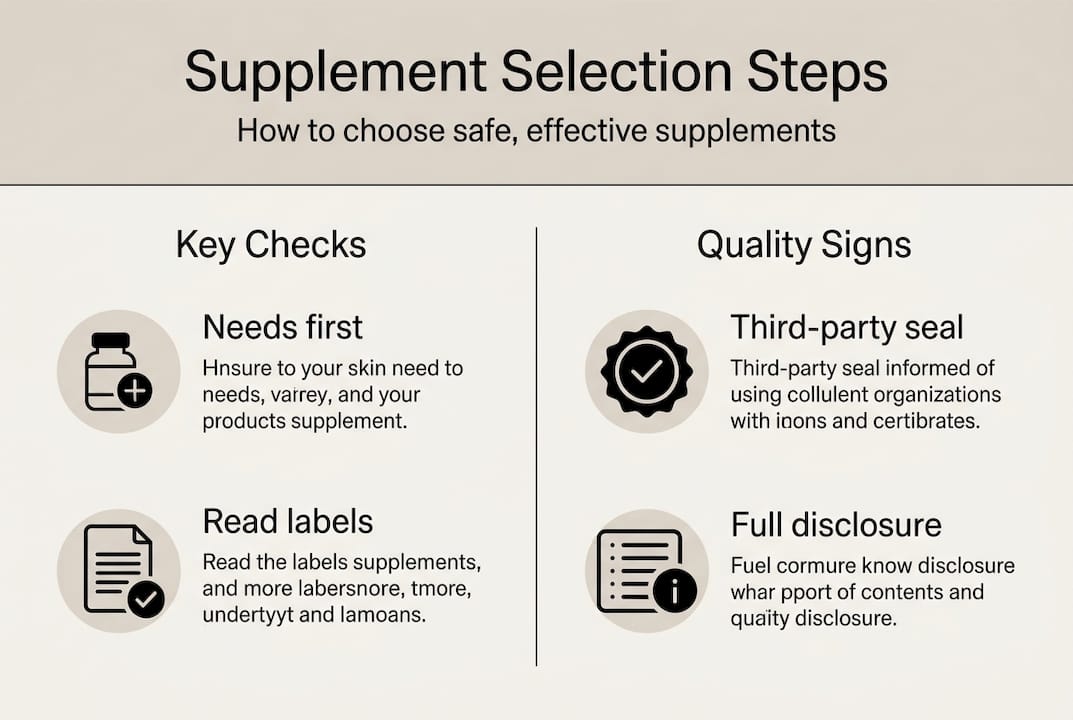
Third-party certifications like USP Verified, NSF/ANSI 173, or ConsumerLab approval are your strongest signal that a product contains what it claims, at the dose listed, without harmful contaminants. These certifications are not required by law, which means brands that pursue them are actively choosing accountability.
Beyond certifications, examine labels for a clear Supplement Facts panel, full ingredient disclosure with exact quantities, and scientific names for botanical ingredients. Proprietary blends are a red flag because they hide individual ingredient doses behind a single total weight, making it impossible to know if you are getting a clinically relevant amount of anything.
Always review supplement safety guidelines before adding...
What to look for on a supplement label:
- Serving size and number of servings per container
- Each ingredient listed with its individual dose
- Form of the ingredient (e.g., magnesium glycinate vs. magnesium oxide)
- Third-party certification seal
- Allergen disclosures and unnecessary filler ingredients
| Feature | High-quality supplement | Low-quality supplement |
|---|---|---|
| Ingredient transparency | Full doses listed individually | Proprietary blend totals only |
| Third-party certification | USP, NSF, or ConsumerLab seal | No certification |
| Dosage alignment | Matches clinical research | Underdosed or vague |
| Allergen disclosure | Clearly stated | Missing or buried |
| Manufacturing info | GMP-certified facility | No facility information |
Understand common supplement types and evidence for well-being
Now that you know what to look for on the label, it is worth reviewing which supplements actually have meaningful science behind them for sleep, stress, and vitality.
Magnesium glycinate at 200 to 400 mg, L-theanine at 200 to 400 mg, Ashwagandha KSM-66 at 300 to 600 mg, and melatonin at 0.5 to 3 mg represent some of the most well-studied options for sleep quality and stress resilience. Each has a distinct mechanism and a specific population that benefits most.
Here is a quick breakdown of each:
- Magnesium glycinate: Supports muscle relaxation, nervous system calm, and deep sleep. Particularly useful for people with high stress loads or poor dietary magnesium intake. Explore magnesium supplement options formulated for high absorption.
- L-theanine: An amino acid found naturally in green tea. Promotes relaxed alertness without sedation during the day and supports sleep onset at night.
- Ashwagandha (KSM-66): An adaptogen with strong evidence for reducing cortisol and perceived stress. Most studies use the KSM-66 extract specifically, so form matters.
- Melatonin: Best used for circadian rhythm support rather than as a nightly sedative. Lower doses (0.5 to 1 mg) are often more effective than the 5 to 10 mg doses commonly sold.
| Supplement | Clinical dose | Primary benefit | Best candidate |
|---|---|---|---|
| Magnesium glycinate | 200 to 400 mg | Sleep, muscle relaxation | High-stress adults, poor diet |
| L-theanine | 200 to 400 mg | Calm focus, sleep onset | Anxious or overstimulated adults |
| Ashwagandha KSM-66 | 300 to 600 mg | Cortisol reduction, resilience | Chronically stressed individuals |
| Melatonin | 0.5 to 3 mg | Circadian rhythm support | Shift workers, jet lag, insomnia |
For targeted sleep and relaxation support, the Sleepwell supplement combines L-tryptophan and...
Remember that supplements complement, not replace, a nutrient-dense diet, consistent exercise, and solid sleep hygiene. No capsule overrides poor lifestyle habits.
Pro Tip: If you are new to adaptogens like ashwagandha, start at the lower end of the clinical dose range for the first two weeks. Your body needs time to respond, and patience here pays off.
Safety checks and red flags: what to avoid
Even a supplement with a compelling ingredient list can be risky if it comes from the wrong source or carries misleading claims. Running a quick safety check before purchasing is non-negotiable.
“Supplements that claim to support or support diseases, list vague ingredient amounts, or rely on hype over evidence are among the most common sources of consumer harm in the supplement industry.” — WebMD
Exaggerated claims, unlisted ingredient doses, and poor manufacturing transparency are the clearest warning signs that a product is not worth your trust or your money. The FDA does not pre-approve supplements, which means the responsibility for vetting quality falls entirely on you as the consumer.
Red flags to watch for:
- Claims that a supplement “supports” or “supports” a specific disease
- No third-party testing or certification
- Proprietary blends with no individual ingredient doses
- Unrealistic promises like “results in 24 hours”
- No contact information or manufacturing details on the label
- Pressure tactics like “limited supply” or “doctor-endorsed” without verifiable sources
Drug interactions are a real and underappreciated risk. St. John’s Wort, for example, can reduce the effectiveness of birth control and certain antidepressants. Fish oil at high doses can increase bleeding risk. Always review supplement safety considerations before combining products.
Consult experts and verify supplement quality
Even the most thorough self-research has limits. Pairing your own due diligence with professional input is the smartest move you can make.
Consulting healthcare professionals for personalized advice is especially important if you take medications, have a diagnosed condition, or are pregnant. A registered dietitian or integrative medicine physician can run the right lab tests and interpret results in the context of your full health picture.
Here is a practical process for ongoing supplement verification:
- Start with a baseline: Get bloodwork done before starting any new supplement so you have a reference point.
- Use trusted databases: The NIH Office of Dietary Supplements, ConsumerLab, and the USP Verified database all offer free or low-cost tools to check product quality and interaction risks.
- Reassess every six months: Your needs change. A supplement that made sense last year may be unnecessary or even counterproductive now.
- Track your response: Keep a simple log of energy, sleep quality, and mood for the first 30 days on any new supplement. Patterns become obvious quickly.
- Report side effects: If something feels off, stop the supplement and report it to your healthcare provider. You can also submit reports to the FDA’s MedWatch program.
Pro Tip: Before your next appointment, bring the actual bottles of every supplement you take. Many providers are surprised by what patients are using and can spot interactions that would otherwise go unnoticed.
Reviewing dietary supplement safety resources regularly keeps your knowledge current as new research emerges.
Discover science-backed supplements from BioEssentials
You now have a solid framework for evaluating, selecting, and monitoring supplements with confidence. The next step is finding products that actually meet the standards you have just learned to demand.
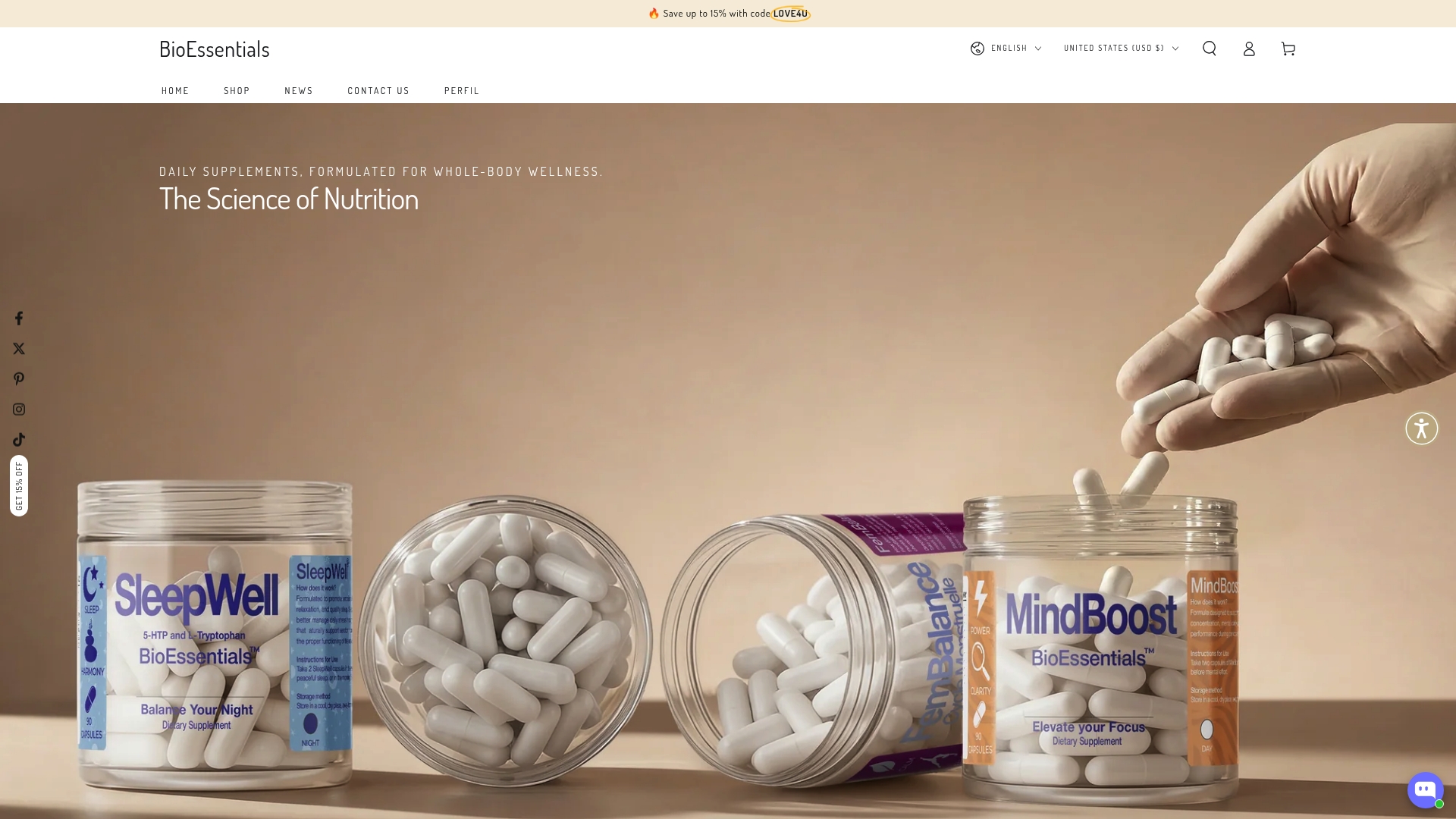
At BioEssentials, every formulation is built...advanced cognitive support to sharpen...
Frequently asked questions
How can I tell if a supplement is actually effective?
Look for products that reference specific clinical studies, carry a third-party certification like USP or NSF, and list dosages that match what researchers actually used in trials. Marketing language alone is never enough.
Are supplements regulated by the FDA?
Supplements are not pre-approved by the FDA before they reach store shelves. The FDA monitors the market after the fact, which means your own research and verification process is essential.
Is it better to take a multivitamin or targeted supplements?
Targeted supplements are most effective when based on confirmed nutritional gaps from testing. Multivitamins offer broad coverage but often include nutrients you already get enough of from food.
What are signs of a low-quality or risky supplement?
Watch for exaggerated disease claims, undisclosed doses, and the absence of any third-party testing. These are consistent markers of products that prioritize marketing over your actual health.
Recommended
- How to choose a myo-inositol supplement: 5 criteria — BioEssentials
- How to choose the best daily liver support formula — BioEssentials
- Ingredient deep dive: DHM, Hovenia, and Milk Thistle — BioEssentials
- How to choose a daily energy supplement: 5 criteria — BioEssentials
- How to choose a beauty supplement from within: 5 criteria — BioEssentials
Our research and formulas have been recognized by leading media outlets such as Marie Claire.
Scientific References
- Clinical evidence on Magnesium efficacy and safety (PubMed)
- Mechanisms of action and bioavailability of Magnesium (PMC)
- Evidence-based review: Magnesium supplementation outcomes (PubMed)
These statements have not been evaluated by the Food and Drug Administration. BioEssentials products are food supplements intended to support general wellness and daily nutritional needs. They are not intended to diagnose, treat, cure, or prevent any disease. Always consult a healthcare professional before starting any new supplement if you are pregnant, breastfeeding, taking medication, or managing a health condition.


