
Choose evidence-based focus supplements: 5 criteria
Table of Contents
TL;DR:
- Many focus supplements lack credible clinical evidence despite sophisticated marketing claims.
- Clear evaluation criteria and understanding of research are essential before choosing cognitive formulas.
- A safe, evidence-based supplement like MINDBOOST® 1200 meets transparency, safety, and efficacy standards.
Every week brings another supplement promising sharper focus, faster recall, and relentless clarity. The sheer volume of these claims makes it almost impossible to separate genuine science from polished copywriting. Cochrane reviews confirm that many advertised supplements lack credible clinical evidence for their stated benefits. If you are a professional, founder, or knowledge worker, you do not have time or budget to gamble on unproven formulas. This article gives you a five-point evidence-based checklist, walks through what research actually says about key ingredients, and shows you how to apply every criterion before you spend a penny.
Key Takeaways
| Point | Details |
|---|---|
| Evidence beats hype | Focus supplement choices should be rooted in systematic research, not marketing claims. |
| Check for safety | Consult healthcare providers and review side effects and risks before starting any supplement. |
| Practical checklist | Using a stepwise, evidence-based approach helps ensure supplements support cognitive goals. |
| Marketing rarely aligns with science | Professionals must look past flashy ads to find what genuinely works and is safe. |
How to spot marketing noise versus evidence
Marketing campaigns for focus supplements are sophisticated. They borrow the language of science, reference obssupport studies, and feature confident before-and-after testimonials. The problem is that anecdotal reports and cherry-picked pilot studies are not the same as systematic, peer-reviewed research. Knowing the difference is the single most useful skill you can develop as a supplement buyer.
A genuine evidence signal comes from randomised controlled trials (RCTs) with an adequate sample size, a placebo arm, and pre-registered outcomes. Marketing noise, by contrast, tends to lean on observational data, animal models, or studies funded entirely by the manufacturer. Cochrane-level analysis has repeatedly shown that supplement claims lack robust backing, even for household names like Ginkgo biloba.
Approachingevidence-based supplementation means asking a...
Pro Tip: Always search PubMed or Cochrane for the ingredient name plus the outcome you care about. Reading the abstract of two systematic reviews tells you more than any product page.
Here is a quick comparison of three commonly marketed ingredients to illustrate the gap between hype and reality:
| Ingredient | Evidence quality | What the research says |
|---|---|---|
| Ginkgo biloba | Low (Cochrane) | No convincing benefit in healthy adults |
| Bacopa monnieri | Moderate | Memory and recall improvements after 12 weeks |
| L-theanine alone | Low to moderate | Modest relaxation; limited standalone focus data |
When you understand thedifference between structured and generic...
“The presence of a study is not proof of efficacy. Study quality, independence, and replication are what separate a real effect from a statistical artefact.”
Understanding key focus supplement ingredients
Now that you know how to recognise marketing noise, let us examine the ingredients that actually carry research weight.
Bacopa monnieriis the most robustly studied herbal cognitive ingredient currently available. Systematic reviews confirm that it improves memory free recall and sustained attention after 12 weeks of daily supplementation at 300 to 450 mg. The catch: gastrointestinal upset is a frequently reported side effect, particularly when taken without food. That is a real trade-off worth factoring in.
L-theanineis often marketed as a standalone focus enhancer, but the evidence for L-theanine in isolation is considerably weaker. Its most reliable benefit emerges when paired with caffeine, where the combination produces sharper, calmer alertness than either compound alone. Without that pairing, the focus claims are overstated.
Citicolineis arguably the most underappreciated ingredient in cognitive supplementation. It contributes to phosphatidylcholine synthesis, supporting neuronal membrane integrity and acetylcholine production. Read more aboutciticoline cognitive benefits to understand...
Magnesium L-threonatehas emerging data supporting its ability to cross the blood-brain barrier more effectively than standard magnesium forms. If brain health and neuroprotection matter to you, exploringL-threonate for brain health is...
Here is a data summary of these core ingredients:
| Ingredient | Studied dose | Evidence level | Primary benefit |
|---|---|---|---|
| Bacopa monnieri | 300-450 mg/day | Moderate (RCTs) | Memory and attention |
| Citicoline | 250-500 mg/day | Moderate | Focus, brain energy |
| L-theanine + caffeine | 100-200 mg each | Moderate | Alert, calm focus |
| Magnesium L-threonate | 1.5-2 g/day | Early but promising | Neuroprotection |
A stepwise approach to ingredient evaluation:
- Identify the cognitive outcome you actually need (memory, sustained attention, mood stability).
- Search for systematic reviews on that specific outcome for each candidate ingredient.
- Cross-reference the doses used in studies with the doses on the label.
- Check whether basic supplement safety guidelines are met for that ingredient.
- Assess whether multi-domain benefits exist or whether the ingredient addresses only one narrow function.
Risks, interactions and safety tips
Even the best ingredients are not risk-free. Here is how to protect yourself.
The single most important step any professional can take is a conversation with a healthcare provider before starting a new supplement protocol. Healthcare consultation is especially critical for anyone managing a chronic condition, taking prescription medication, or who is pregnant. Supplement marketing almost never highlights this, because it interrupts the purchasing impulse.

Common side effects to monitor include jitteriness and raised heart rate from caffeine-containing formulas, gastrointestinal discomfort from Bacopa, and allergic reactions from botanical extracts. These are not rare edge cases. They affect a meaningful proportion of users and should be treated as decision-relevant data, not fine print.
Interactions with prescription drugs deserve particular attention. St John’s Wort, for example, is a potent cytochrome P450 inducer and can reduce the effectiveness of several medications. Even seemingly benign ingredients can influence drug metabolism or potentiate sedative effects. Always review your full medication list against any new supplement.
Pro Tip: Start with the lowest effective dose and hold it for two weeks before increasing. This single habit will help you attribute any symptom changes accurately and avoid compounding variables.
Actionable safety tips for professionals:
- Read thesupplement safety guide before starting any new protocol.
- Reviewsupplement stacking safety if combining multiple products.
- Use the guidance atchoosing supplements for health to frame your decision systematically.
- Keep a symptom log for the first four weeks of any new formula.
- Stop immediately and seek medical advice if you experience unusual cardiovascular or neurological symptoms.
Practical checklist for choosing your supplement
With risks and evidence in mind, here is a practical five-point checklist you can apply today. This framework was built specifically to cut through supplement marketing and give professionals a repeatable, science-led decision process.
1. Is the formula stimulant-free or stimulant-dependent?Stimulant-based formulas can produce short-term focus but often come with crashes, dependency, and disrupted sleep. A formula that delivers cognitive support through non-stimulant pathways (such as citicoline, phosphatidylserine, and L-tyrosine) is more sustainable for daily professional use. MINDBOOST® 1200 uses no stimulant dependency mechanisms. Its energy support comes from cellular and cholinergic pathways.
2. Are all doses fully disclosed with no proprietary blends?Proprietary blends hide individual ingredient quantities behind a collective weight. This makes it impossible to verify that any ingredient is present at a clinically relevant dose. Transparent labelling is a non-negotiable marker of trustworthiness. MINDBOOST® 1200 discloses every ingredient and its exact milligram dose, allowing direct comparison with published research.
3. Does each ingredient have a defined cognitive role?Every ingredient in a credible formula should have a specific, research-supported mechanism. Filler ingredients, vague adaptogens without cognitive data, and duplicated pathways are red flags. MINDBOOST® 1200 includes citicoline, uridine, L-tyrosine, and phosphatidylserine, each with documented roles in neurotransmitter support, membrane health, and focus.
4. Does the formula cover multiple cognitive domains?Memory, sustained attention, and neuroprotection are distinct functions that may require different ingredients. A formula addressing only one domain leaves gaps. MINDBOOST® 1200 is designed for multi-domain coverage: working memory, executive focus, and long-term brain health are all targeted in a single, coherent formula.
5. Is third-party testing verified by a named laboratory?Manufacturer self-testing is not independent verification. Named third-party laboratory certification confirms purity, potency, and absence of contaminants. MINDBOOST® 1200 undergoes independent third-party testing, providing the kind of verification that marketing claims alone cannot offer.
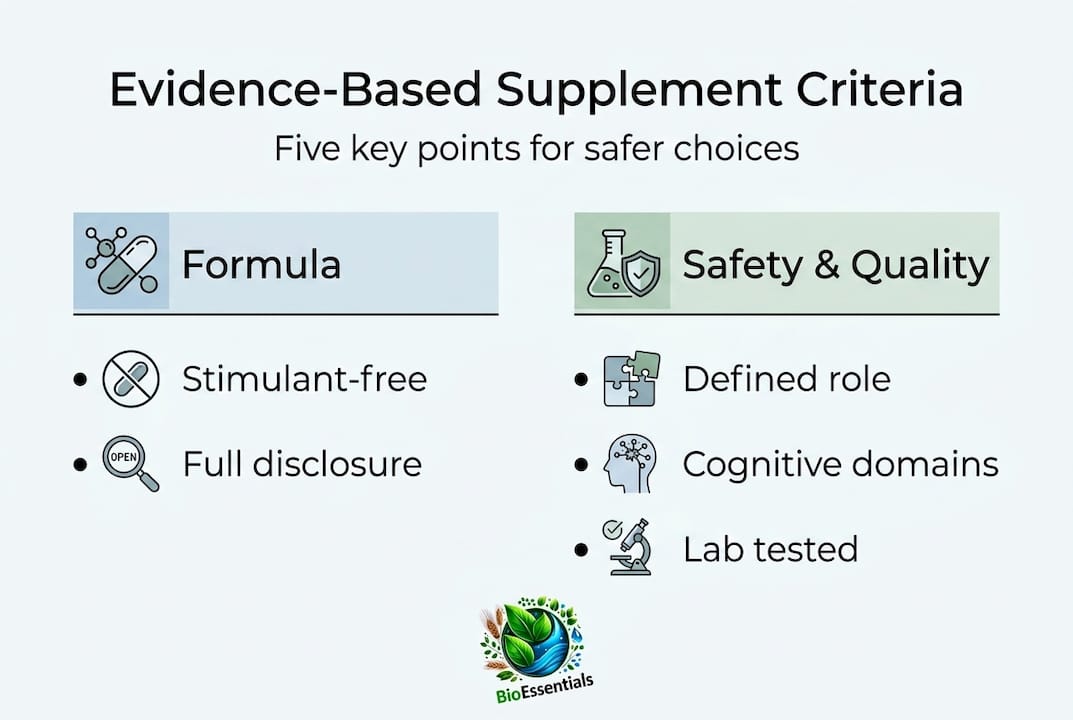
Relying on credible sources and healthcare advice consistently produces better outcomes than relying on product pages. This checklist operationalises that principle.
| Criterion | MINDBOOST® 1200 response |
|---|---|
| Stimulant-free or non-dependent | ✓ No stimulant dependency |
| Fully disclosed doses, no proprietary blends | ✓ Full label transparency |
| Each ingredient has a defined cognitive role | ✓ Citicoline, uridine, L-tyrosine, phosphatidylserine |
| Multi-domain cognitive coverage | ✓ Memory, focus, neuroprotection |
| Third-party testing by named laboratory | ✓ Independent verification confirmed |
Apply this same table to any formula you are considering. If a product fails even one criterion, that is useful information. Reference your mindful supplementation habits and revisit the decision with fresh eyes.
Why supplement marketing often misses what professionals need
Marketing teams and scientists rarely share the same goals. A marketing team optimises for conversion. A scientist optimises for truth. The result is that evidence rarely makes the headline, because nuance does not sell.
Consider Bacopa monnieri. Several rigorous reviews show genuine memory benefits. But the same body of research notes heterogeneous study results due to variation in extract standardisation, duration, and participant populations. A marketer picks the positive headline. A professional needs the full picture.
What you actually need from a supplement resource is clarity about effect sizes, honesty about limitations, and transparency about safety trade-offs. Most product pages provide none of these. Building the habit of structured supplement evaluation protects you from a market where enthusiasm and evidence are frequently confused for one another. Scepticism, applied systematically, is the most powerful cognitive tool you already own.
Find science-backed focus solutions
If you have worked through this checklist and want a formula that passes all five criteria, you do not need to keep searching.
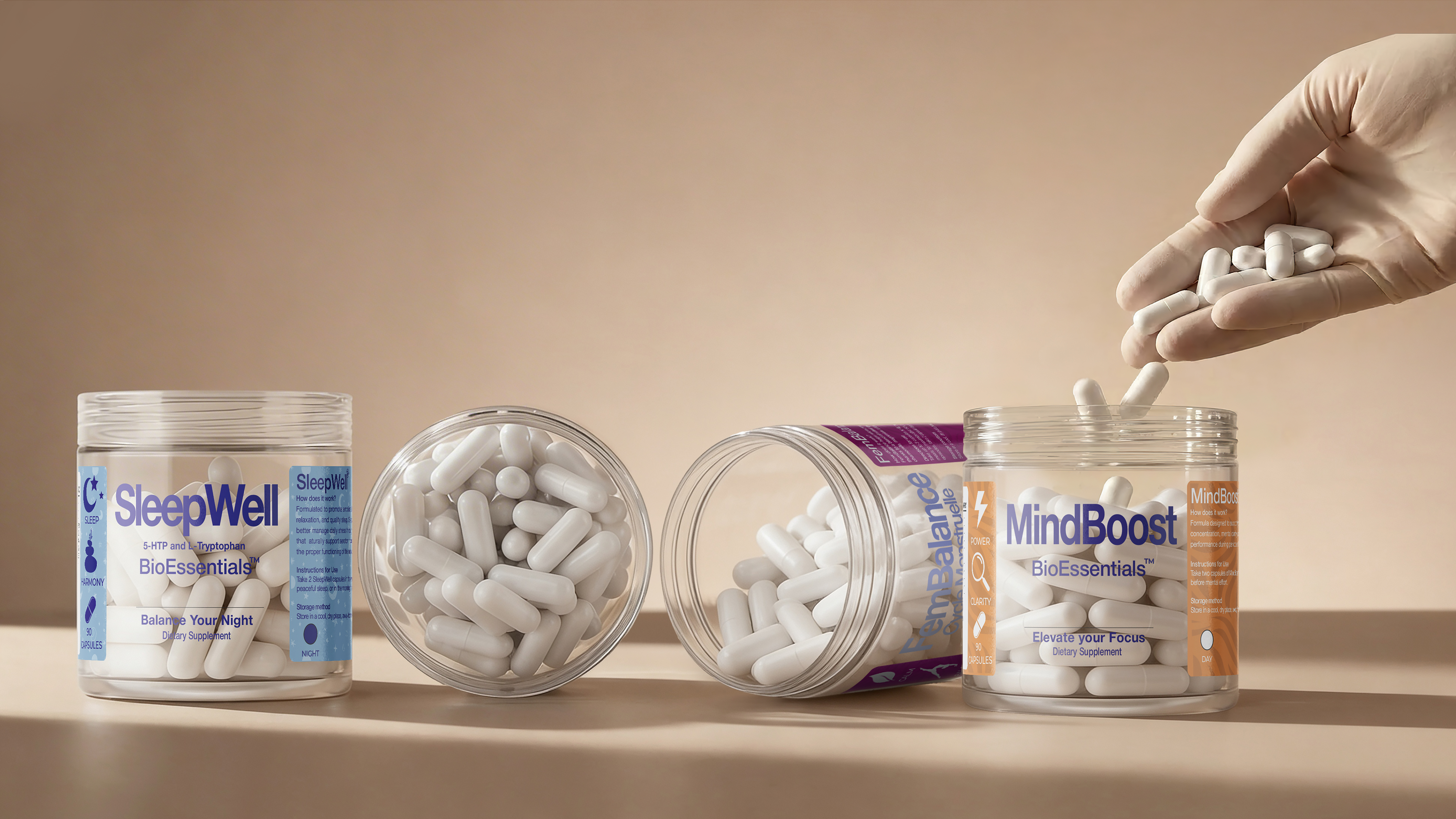
MINDBOOST® 1200 is BioEssentials’ research-driven...MINDBOOST focus range or visit BioEssentials to see the full...
Frequently asked questions
What makes a focus supplement evidence-based?
An evidence-based supplement relies on quality clinical trials with independent replication, not marketing claims or manufacturer-funded testimonials. Systematic reviews of Bacopa illustrate the standard that genuine evidence must meet.
How long does it take for Bacopa monnieri to improve focus?
Bacopa monnieri improves memory and sustained attention after 12 weeks of consistent daily use according to systematic reviews. Expect no meaningful results before that threshold.
Should I consult a healthcare provider before starting a focus supplement?
Yes, consultation is vital, particularly if you take other medications or have an existing health condition. Healthcare provider consultation is especially important during pregnancy or when managing chronic illness.
Are there focus supplements with proven benefits for healthy professionals?
Only a small number of ingredients, including Bacopa and Citicoline, carry moderate evidence from RCTs. Many popular options, including Ginkgo biloba, lack convincing evidence in healthy adults. Bacopa research remains one of the stronger bodies of cognitive supplement data available.
What are the top risks of taking supplements for focus?
Jitteriness, gastrointestinal upset, interactions with prescription drugs, and allergic reactions are the most common risks. Monitoring for these side effects from day one helps you respond quickly if problems arise.
Recommended
- How to choose the best daily liver support formula — BioEssentials
- How to choose a focus supplement: 5 expert criteria — BioEssentials
- How to choose a daily energy supplement: 5 criteria — BioEssentials
- How to choose a myo-inositol supplement: 5 criteria — BioEssentials
- Multi-pathway liver support: the new standard — BioEssentials
Our research and formulas have been recognized by leading media outlets such as Marie Claire.
Scientific References
- Clinical evidence on Citicoline efficacy and safety (PubMed)
- Mechanisms of action and bioavailability of Citicoline (PMC)
- Evidence-based review: Citicoline supplementation outcomes (PubMed)
These statements have not been evaluated by the Food and Drug Administration. BioEssentials products are food supplements intended to support general wellness and daily nutritional needs. They are not intended to diagnose, treat, cure, or prevent any disease. Always consult a healthcare professional before starting any new supplement if you are pregnant, breastfeeding, taking medication, or managing a health condition.


