
Topptillskott för tarmhälsa och en balanserad mikrobiom
TL;DR:
- Effective gut supplements require specific strains, ingredients, and third-party verification for safety.
- Dietary fiber and fermented foods are more impactful for microbiome health than most supplements for healthy adults.
- Supplements are best targeted for recovery or specific gut conditions, not as a daily universal fix.
The gut health supplement market has exploded in recent years, with thousands of products claiming to transform your microbiome overnight. But navigating this crowded space without a clear framework is genuinely difficult. Not every probiotic works for every person, not every prebiotic feeds the right bacteria, and the regulation of these products remains frustratingly inconsistent. This article walks you through exactly how to evaluate, compare, and choose microbiome supplements that have real evidence behind them — so you spend your money on what actually moves the needle.
Table of Contents
- How to evaluate supplements for your gut microbiome
- Probiotics: Which strains matter most?
- Prebiotics: Feeding your good bacteria
- Synbiotics and combination formulas: Are they more effective?
- Supplements vs whole foods: What works best?
- Our take: What most people get wrong about gut health supplements
- Ready to support your gut? Science-backed options from BioEssentials
- Frequently asked questions
Key Takeaways
| Point | Details |
|---|---|
| Targeted strains are key | Probiotic benefits depend on the exact strain and health condition addressed. |
| Prebiotics feed good bacteria | Inulin and similar prebiotics help increase beneficial gut microbes and improve regularity. |
| Synbiotics may enhance results | Combining probiotics and prebiotics can increase microbial diversity and health markers, especially after antibiotics. |
| Whole foods come first | A fibre-rich and fermented food diet outperforms most supplements for broad gut health. |
| Supplements suit special cases | Consider supplements for gut issues or after antibiotics, not as a substitute for a healthy diet. |
How to evaluate supplements for your gut microbiome
Before looking at supplement options, it’s crucial to understand how to spot those that genuinely benefit your gut. The single biggest mistake people make is choosing a supplement based on marketing language rather than on the specific evidence behind it. Words like “clinically proven” and “supports gut health” mean very little without knowing which strain, which dose, and which population was studied.
Here are the key criteria to apply before purchasing any gut health supplement:
- Strain specificity: For probiotics, the strain matters enormously. Lactobacillus rhamnosus GG does not do the same thing as Lactobacillus acidophilus. Look for genus, species, and strain designation on the label.
- Prebiotic selectivity: A good prebiotic should selectively feed beneficial bacteria like Bifidobacterium, not just any bacteria in your gut. Look for well-researched ingredients like inulin or fructooligosaccharides (FOS).
- Synbiotic design: Products that combine prebiotics and probiotics in a single formula can outperform either ingredient alone, particularly for people recovering from gut disruption.
- Third-party testing: Look for products verified by independent labs to confirm what’s on the label is actually in the capsule.
- Regulatory awareness: As Mayo Clinic notes, dietary supplements including probiotics are not tightly regulated by the FDA, meaning quality varies considerably between brands.
It is also worth noting that before reaching for any supplement, diet remains the most powerful lever for microbiome health. Achieving 30g or more of dietary fibre daily, and regularly eating fermented foods like kefir, kimchi, or live yoghurt, can have more impact than most supplements. Before you invest in a new product, it pays to read a solid supplement safety guide and understand the principles of choosing genuine supplements that are worth your time and money.
Pro Tip: Always check whether a probiotic’s strain designation appears on the label. If it only says Lactobacillus without the species and strain code, you have no way to verify what research backs that specific product.
Probiotics: Which strains matter most?
With the right criteria in mind, let’s break down the core supplement categories starting with probiotics. These are live micro-organisms intended to confer a health benefit when consumed in adequate amounts. The science around specific strains has matured significantly, giving us clear winners for targeted situations.
Research published in 2025 reviewing the mechanisms of biotics demonstrates that probiotics work by competing with pathogens for nutrients and adhesion sites, producing short-chain fatty acids (SCFAs), and actively strengthening the gut barrier. These are not minor effects. SCFAs like butyrate directly nourish the cells lining your colon and help regulate immune function.
The strains with the strongest evidence include:
- Bifidobacterium longum infantis 35624: Best studied for IBS and bloating
- Lactobacillus rhamnosus GG: Well evidenced for antibiotic-associated diarrhoea and children’s gut issues
- Lactobacillus reuteri DSM 17938: Studied for reducing pain in functional abdominal disorders
- Bifidobacterium animalis subsp. lactis: Supports bowel regularity and constipation
- Multi-strain blends: Often show broader effects across digestive complaints
A network meta-analysis found that probiotics produced a relative risk of 1.33 for global improvement of symptoms and 1.85 for pain resolution compared to placebo in functional abdominal pain disorders. Those are meaningful numbers. The key point is that specific strains drove those results, not generic “probiotic blends.”
Worth knowing: In people without existing gut conditions, probiotics are unlikely to dramatically shift your microbiome composition. They are most powerful when there is a genuine disruption to address, such as post-antibiotic recovery, IBS, or inflammatory gut conditions.
If you are interested in how a well-designed formula applies these principles, the research behind advanced probiotics is worth exploring, as is the case for multi-strain probiotic benefits in supporting diverse gut needs.
Pro Tip: When taking probiotics after antibiotics, start them as soon as possible during the course rather than waiting until you’ve finished. Some evidence suggests earlier use is more protective for your microbiome.
Prebiotics: Feeding your good bacteria
Probiotics introduce live bacteria, but those bacteria need the right fuel — that’s where prebiotics come in. A prebiotic is a substrate that is selectively used by beneficial host micro-organisms, conferring a health benefit. In practice, this means specific types of dietary fibre that your own digestive enzymes cannot break down, but that beneficial bacteria can ferment.
The most well-researched prebiotics include:
- Inulin: Found naturally in chicory root, Jerusalem artichoke, and onions. Increases Bifidobacterium and produces butyrate.
- Fructooligosaccharides (FOS): Similar to inulin in structure and effect. Often derived from chicory or agave.
- Galactooligosaccharides (GOS): Found in human breast milk and some legumes. Particularly effective at boosting Bifidobacterium.
- Resistant starch: Found in cooked and cooled potatoes, green bananas, and legumes. Feeds a wide range of beneficial bacteria.
A well-designed randomised controlled trial found that 12g of inulin daily significantly increased stool frequency, Bifidobacterium populations, and Anaerostipes (a key butyrate producer) in people with constipation. This is precisely the kind of targeted, measurable outcome that matters when evaluating a prebiotic product.

Key callout: 12g of inulin per day was the effective dose in constipation research, producing measurable changes in both bacterial composition and stool frequency within the trial period.
At higher doses, prebiotics like inulin can cause gas and bloating, particularly in people who are not accustomed to high-fibre diets. Starting low and building gradually is the sensible approach. Pairing prebiotics with a probiotic often smooths this transition and amplifies the beneficial effects.
Understanding evidence-based wellness habits around supplementation will help you integrate prebiotics sensibly into your routine. For those recovering from gut disruption, gut restoration tips can also inform a more structured approach.
Synbiotics and combination formulas: Are they more effective?
Beyond individual ingredients, some products combine forces — let’s see if synbiotics outperform single-supplement approaches. A synbiotic is a combination of a probiotic and a prebiotic, specifically designed so that the prebiotic acts as fuel for the introduced probiotic strain. When the pairing is complementary, the result is greater than the sum of its parts.
A recent randomised controlled trial demonstrated that a synbiotic formula produced a 49-fold increase in Urolithin A (a gut-derived compound associated with cellular health), improved alpha-diversity of the microbiome, and reduced CRP (a key inflammation marker) by day 91. These are not marginal effects. They suggest that well-formulated synbiotics can produce meaningful systemic changes over time.
Here is a simplified comparison of how different supplement formats tend to perform:
| Supplement type | Best evidence for | Effect in healthy adults | Effect in gut disruption |
|---|---|---|---|
| Probiotic (single strain) | Targeted symptom relief | Modest | Strong |
| Probiotic (multi-strain) | Broad digestive support | Moderate | Strong |
| Prebiotic (inulin/FOS) | Constipation, Bifidobacterium growth | Good | Good |
| Synbiotic (combined) | Diversity, inflammation, recovery | Moderate to strong | Very strong |
Synbiotics are particularly well suited for people who:
- Are recovering from antibiotic treatment
- Have a history of inflammatory gut conditions
- Follow a low-fibre diet and are rebuilding microbial diversity
- Want to address both bacterial population and food supply in one step
Pro Tip: When evaluating a synbiotic product, check that the prebiotic ingredient is matched to the probiotic strain. A formula containing inulin alongside Bifidobacterium strains is more logical than one pairing a random fibre with an unrelated strain, because Bifidobacterium is a known inulin fermenter.
Choosing products designed with this level of scientific thought is exactly what distinguishes trustworthy supplement formulations from generic alternatives. The principle of premium supplement design matters more than most people realise when it comes to gut health products.
Supplements vs whole foods: What works best?
With all these supplement options explored, how do they actually measure up against making changes to your diet? The honest answer is nuanced, and understanding it will save you both money and frustration.
| Approach | Strengths | Limitations |
|---|---|---|
| Probiotic supplements | Targeted strain delivery, convenient | Expensive, strain-specific, poorly regulated |
| Prebiotic supplements | Measurable microbial effects, easy to dose | Gas/bloating at high doses, not always needed |
| High-fibre diet (30g+/day) | Broad microbiome support, sustainable | Requires dietary discipline |
| Fermented foods | Natural strain diversity, bioavailable | Not suitable for everyone |
| Synbiotic supplements | Combined effect, suitable for recovery | Higher cost, variable quality |
Mayo Clinic’s guidance is clear: dietary fibre and fermented foods remain more broadly impactful for microbiome health than most supplements, and the FDA does not regulate probiotic products with the same rigour applied to medicines. This does not mean supplements are useless. It means they work best when used strategically rather than as a replacement for a poor diet.
A 2025 meta-analysis confirmed that in healthy adults, probiotics do not significantly increase gut microbiota diversity, with Shannon diversity index changes showing no meaningful difference compared to placebo. This is an important finding. It tells us that if you are already healthy and eating well, adding a probiotic is unlikely to dramatically improve your microbiome composition.
The practical takeaway: Supplements are powerful tools for targeted situations. A healthy adult eating 35g of fibre daily and regularly consuming fermented foods will likely get limited additional benefit from a probiotic. But someone recovering from a course of antibiotics, managing IBS, or dealing with inflammatory gut symptoms? A well-chosen probiotic or synbiotic can genuinely make a difference.
If you want to understand how to get more from the food you already eat before spending on supplements, the principles behind optimising nutrient absorption are an excellent starting point.
Our take: What most people get wrong about gut health supplements
Let’s zoom out and offer a frank, research-based perspective many mainstream guides miss. The gut health supplement industry has done a brilliant job of making everyone feel their microbiome is broken and needs fixing. The reality is more grounded than that.
Most healthy adults do not need a daily probiotic. What they need is more fibre, more variety in their plant foods, and regular consumption of fermented foods. These habits produce lasting changes to microbiome composition in a way that a daily capsule simply cannot replicate on its own. The evidence behind multi-strain synbiotics is genuinely compelling, but it is most compelling for people with a genuine reason to use them.
Where supplements earn their place is in specific, targeted situations. After antibiotics, after illness, when managing a diagnosed gut condition, when your diet is genuinely lacking in fibre for structural reasons — these are the moments when a well-formulated probiotic, prebiotic, or synbiotic earns its keep. Treating them as a support-all, or as a substitute for dietary effort, is where people consistently go wrong.
Our advice: build the dietary foundation first. Then layer in targeted supplementation where real evidence supports it for your specific situation. This is not a popular message in a market built on the idea that your gut is constantly one supplement away from perfection, but it is the honest one.
Ready to support your gut? Science-backed options from BioEssentials
If you’re ready to invest in trusted gut health support, here’s where to find rigorously tested, evidence-driven options. At BioEssentials, every formula is built around clinically researched ingredients at meaningful doses, not token inclusions added for label appeal. The difference between a product that works and one that doesn’t often comes down to formulation integrity.
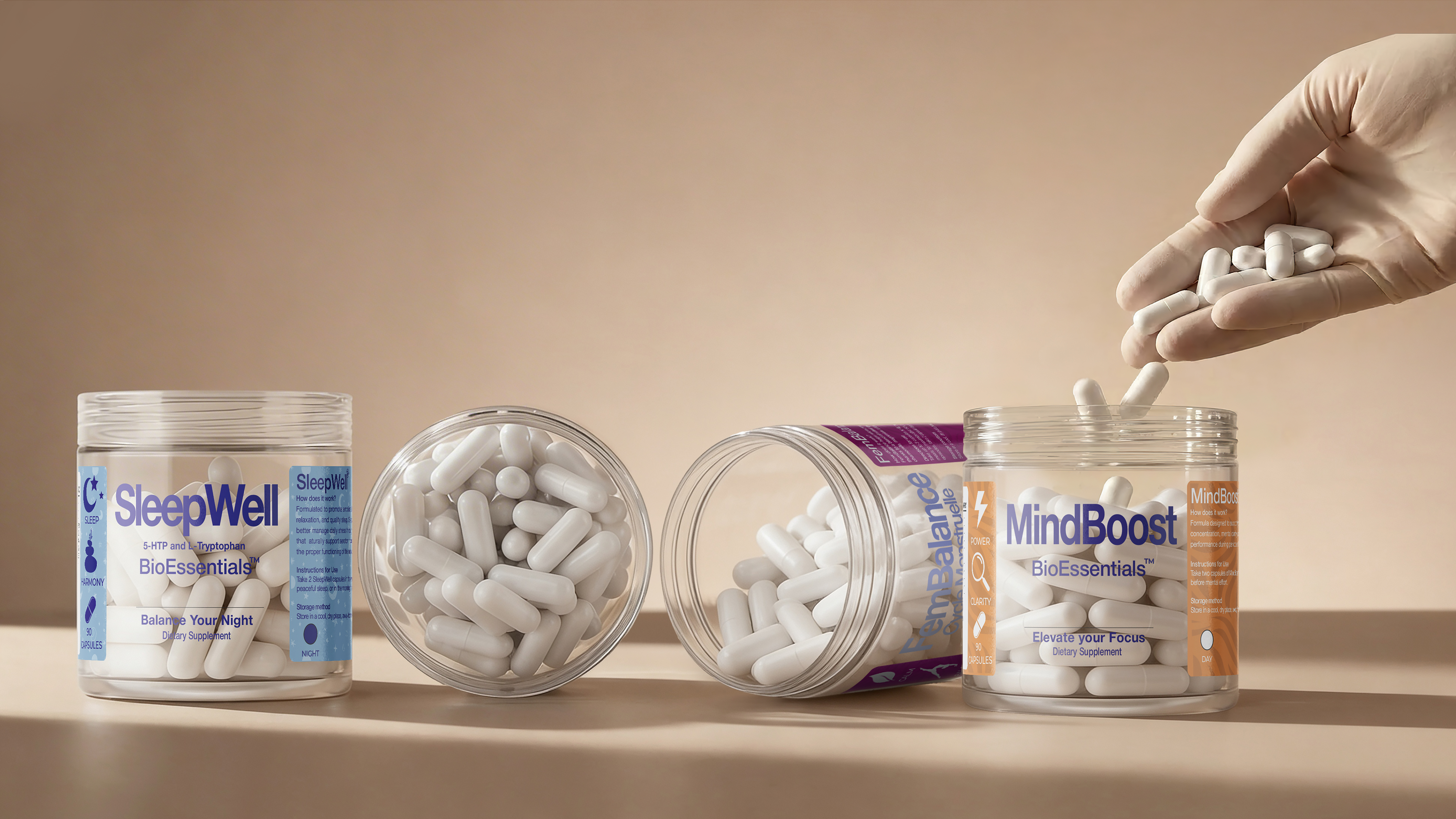
Whether your priority is gut balance, daily vitality, cognitive clarity with BioEssentials mind support, or overnight recovery with a night recovery supplement, BioEssentials approaches every product category with the same scientific rigour. Explore the full range of science-backed supplements and find formulas that match your specific goals rather than generic wellness promises.
Frequently asked questions
Which probiotic strain is best for IBS symptoms?
Bifidobacterium longum infantis 35624 has the strongest evidence for IBS and bloating, with clinical trials showing significant improvement over placebo. Always confirm the full strain designation on the product label before purchasing.
Can prebiotic supplements cause digestive side effects?
Yes, prebiotics like inulin can cause mild gas or bloating, particularly at higher doses. A constipation RCT using 12g of inulin daily showed benefit alongside manageable tolerance for most participants. Starting with a lower dose and increasing gradually minimises discomfort.
Do gut health supplements increase microbiome diversity?
In healthy adults, most probiotics do not significantly boost overall microbiome diversity. A meta-analysis of RCTs found no meaningful change in Shannon or Simpson diversity indices. Synbiotics show more promise in this area, particularly for people recovering from gut disruption.
Should gut health supplements be taken daily?
Daily use is most justified for people with digestive conditions or specific recovery needs. For healthy adults, Mayo Clinic’s guidance suggests a fibre-rich, varied diet with fermented foods delivers more reliable microbiome benefit than routine supplementation alone.
Recommended
- How to choose a focus supplement: 5 expert criteria — BioEssentials
- How to choose a beauty supplement from within: 5 criteria — BioEssentials
- How to choose a daily energy supplement: 5 criteria — BioEssentials
- How to stack magnesium: 5 BioEssentials formulas explained — BioEssentials
- How to choose a blood sugar support supplement: 5 criteria — BioEssentials
Our research and formulas have been recognized by leading media outlets such as Marie Claire.
Scientific References
- Clinical evidence on Lactobacillus efficacy and safety (PubMed)
- Mechanisms of action and bioavailability of Lactobacillus (PMC)
- Evidence-based review: Lactobacillus supplementation outcomes (PubMed)


