
Hur man upptäcker en väldesignad månatlig komfortformel
Table of Contents
- Key Takeaways
- What does ‘thoughtfully designed’ mean in women’s supplements?
- Synergy matters: Why multi-ingredient blends outperform single herbs
- Clean label, real science: Key signs of a trustworthy formula
- Putting it together: How to choose your monthly comfort formula
- Why true comfort starts with formula integrity
- Explore science-backed monthly comfort support
TL;DR:
- Thoughtfully designed PMS formulas use specific, well-absorbed ingredients targeting multiple mechanisms.
- Multi-ingredient blends outperform single herbs by addressing the complex factors of PMS.
- Transparent, clinical-backed formulas with clear doses and no fillers ensure real effectiveness.
Walk into any pharmacy or scroll through any wellness site and you will find dozens of monthly comfort formulas all promising PMS relief. Most of them are popular not because of what is inside, but because of marketing spend. The real difference between a formula that actually works and one that merely sells well lies in the quality of its design: the specificity of its ingredients, the clarity of their mechanisms, and the absence of unnecessary fillers. Knowing what to look for changes everything.
Key Takeaways
| Point | Details |
|---|---|
| Synergy drives results | Multi-ingredient blends target PMS symptoms more effectively than single herbs alone. |
| Clean-label credibility | Transparent, evidence-backed formulas with published data are safer and more effective. |
| Bioavailability is key | Supplements that are easily absorbed deliver better comfort and value for money. |
| Smart choices, better outcomes | Knowing what to look for ensures you choose monthly support that works for you. |
What does ‘thoughtfully designed’ mean in women’s supplements?
The phrase ‘thoughtfully designed’ gets used loosely in the supplement industry, but it has a precise meaning when applied to monthly comfort formulas. It means every ingredient was chosen for a documented reason, dosed at a level that produces a measurable effect, and paired with other ingredients that reinforce rather than dilute its action. That is a very different standard from simply listing popular botanical names on a label.
Most monthly comfort formulas on the market do not meet this standard. They tend to use proprietary blends that obssupport individual doses, rely on ingredients in poorly absorbed forms, and skip third-party testing. The result is a product that looks credible on packaging but underdelivers in practice.
A genuinely thoughtful formula prioritises three things above all else:
- Ingredient specificity: Named forms with documented mechanisms, not generic extracts
- Bioavailability: Forms the body can actually absorb and use efficiently
- Synergy: Combinations designed to address multiple contributing factors simultaneously
Consider FEMBALANCE® as a working model. It uses magnesium bisglycinate, a chelated form that crosses the intestinal wall more efficiently than magnesium oxide and directly supports GABA receptor activity to reduce anxiety and cramping. It includes KSM-66® ashwagandha, a root extract standardised to 5% withanolides, which modulates the HPA axis (the body’s central stress-response system) to lower cortisol. It also incorporates chamomile, which acts on GABA-A receptors to produce a calming effect on the central nervous system. Each ingredient has a clear target and a documented pathway.
“Effective supplementation is not about adding more ingredients. It is about choosing the right ones for the right reasons and making sure they work together.”
This is what premium formula design looks like in practice: a small number of carefully selected, well-characterised ingredients rather than a long list of loosely related botanicals. Clinical evidence supports multi-ingredient natural formulas over single-ingredient approaches, with FemmeBalance improving PMS symptoms in 77% of users across four cycles.
Synergy matters: Why multi-ingredient blends outperform single herbs
PMS is not a single-mechanism condition. It involves fluctuations in oestrogen and progesterone, elevated cortisol, disrupted serotonin signalling, and localised inflammation. That complexity is why single-herb approaches, however well-studied, rarely deliver the full relief most women are looking for.

Chasteberry (Vitex agnus-castus) can support progesterone balance. Magnesium can ease cramping and mood-related symptoms. Ashwagandha can lower stress hormones. Each of these is genuinely useful. But taken alone, each addresses only one thread of a much more tangled picture. Single herbs show modest effects, whereas multi-synergistic formulas target PMS multifactorially with broader, more consistent relief.
The distinction becomes clearer when you compare approaches side by side:
| Feature | Generic women’s blend | FEMBALANCE® |
|---|---|---|
| Ingredient specificity | Vague extract names | Named forms (e.g., KSM-66®, bisglycinate) |
| Mechanism clarity | Not stated | Documented (HPA axis, GABA-A, etc.) |
| Bioavailable forms | Often standard/oxide | High-absorption, chelated, or standardised |
| Clean-label status | Often proprietary blend | Transparent, no artificial additives |
| Clinical backing | Marketing claims only | Published outcome data |
The FemmeBalance clinical results illustrate this well: 77% of participants reported meaningful PMS improvement over four cycles, a figure that reflects what happens when ingredients are chosen for synergy rather than optics.
Expert consensus in integrative medicine is increasingly aligned with this view. When a condition is multifactorial, the intervention needs to be too. Natural PMS relief options that combine evidence-backed botanicals with targeted micronutrients consistently outperform single-ingredient capsules in both clinical and user-reported outcomes.
“Targeting one symptom at a time is like patching one hole in a boat while ignoring the rest.”
Pro Tip: When reviewing a multi-ingredient formula, check whether each ingredient addresses a different mechanism. If three of five ingredients all act on the same pathway, the formula is likely padded rather than purposeful. FEMBALANCE’s approach to PMS demonstrates how distinct mechanisms can be layered for genuine, broader support.
Clean label, real science: Key signs of a trustworthy formula
Knowing that synergy matters is only useful if you can identify which products actually deliver it. Clean-label credentials and scientific transparency are your two most reliable filters.
A clean-label formula lists every ingredient by name and dose, contains no unnecessary binders, artificial colours, or proprietary blend masking, and ideally carries third-party certification confirming that what is on the label matches what is in the capsule. These are not luxury features. They are baseline expectations for any supplement you plan to take consistently.
Scientific credibility shows up in specific ways:
- Named ingredient forms: Magnesium bisglycinate, not just ‘magnesium’. KSM-66® ashwagandha, not just ‘ashwagandha extract’.
- Stated dosages: Clinically relevant amounts, not trace inclusions added for label appeal.
- Published clinical data: Outcomes from real users across multiple cycles, not testimonials.
- Bioavailability rationale: An explanation of why a specific form was chosen for absorption.
Evidence-based habits for wellness consistently point to transparency as the single biggest predictor of supplement quality. You should be able to look up every ingredient on a reputable database and find matching clinical literature.
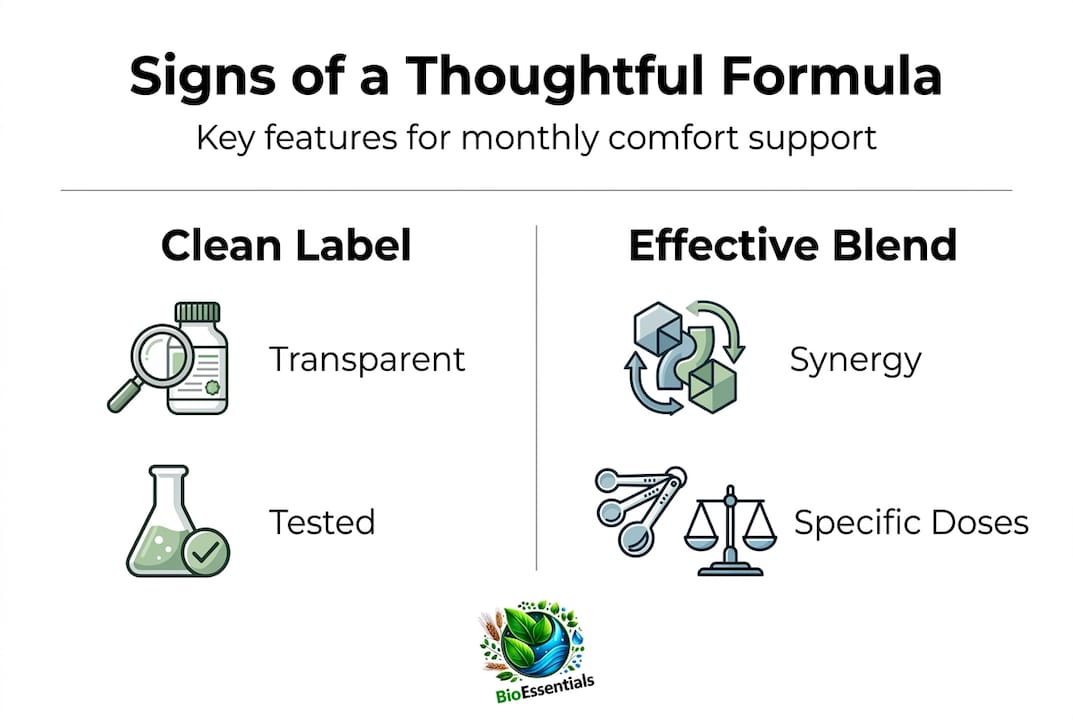
The numbers back this up. A clean-label, high-bioavailability product achieved 91% user satisfaction alongside measurable reductions in PMS symptoms, results that are meaningfully higher than what generic blends typically report.
Pro Tip: Before purchasing, search the brand’s website for a certificate of analysis (COA). If none exists or if the company cannot provide one on request, support that as a red flag regardless of how appealing the packaging looks.
Putting it together: How to choose your monthly comfort formula
With a clear picture of what science and clean labelling mean in formula design, here is a practical approach you can use to select the right monthly comfort formula.
- Read the ingredient list carefully. Named forms matter. ‘Magnesium bisglycinate’ and ‘magnesium oxide’ are not interchangeable. Look for forms with documented bioavailability.
- Check individual dosages. Clinical evidence is dose-dependent. If dosages are hidden inside a proprietary blend, you cannot verify whether the formula is effective.
- Look for mechanism transparency. A trustworthy brand explains what each ingredient does and why it was included, not just that it was included.
- Seek published clinical data. User reviews are useful, but outcome data from structured trials carry far more weight. Clinical trial data consistently show the highest satisfaction rates among users who chose evidence-backed, multifaceted formulas.
- Verify clean-label claims. Allergen-free, artificial-additive-free, and third-party tested claims should be verifiable, not decorative.
- Assess the brand’s design philosophy. Does the website explain the science? Are sourcing decisions and formulation principles documented? These signals separate serious brands from label-first operations.
The BioEssentials design principles reflect exactly this kind of rigorous, science-first approach: ingredient selection driven by mechanism, not trend.
Pro Tip: Give any new formula at least two to three full cycles before drawing conclusions. Hormonal support works cumulatively, and the most meaningful improvements often appear in the second or third month of consistent use.
Why true comfort starts with formula integrity
Here is something the supplement industry rarely says out loud: most products underperform not because natural ingredients do not work, but because the formulas are built around what sells, not what heals. Bright packaging, celebrity endorsements, and trending ingredients drive purchasing decisions far more than clinical evidence does. That is a business model, not a health strategy.
We believe the most important shift a health-conscious person can make is to stop asking ‘is this popular?’ and start asking ‘does this address the actual mechanism behind my symptoms?’ PMS has identifiable physiological roots: cortisol dysregulation, GABA imbalance, micronutrient depletion, and inflammatory signalling. A formula built around a root cause approach targets these pathways directly.
Shortcuts in formulation, whether that means choosing cheaper ingredient forms, skipping third-party validation, or hiding doses behind proprietary blends, always cost the user in the end. Lasting comfort comes from integrity in design: named ingredients, transparent dosing, real clinical data, and the humility to keep refining based on user outcomes. When consumers reward that kind of rigour with their loyalty, the whole industry moves in a better direction.
Explore science-backed monthly comfort support
You now have a clear framework for identifying formulas that are genuinely worth your trust. The next step is finding a product that meets every standard you have just learned to apply.
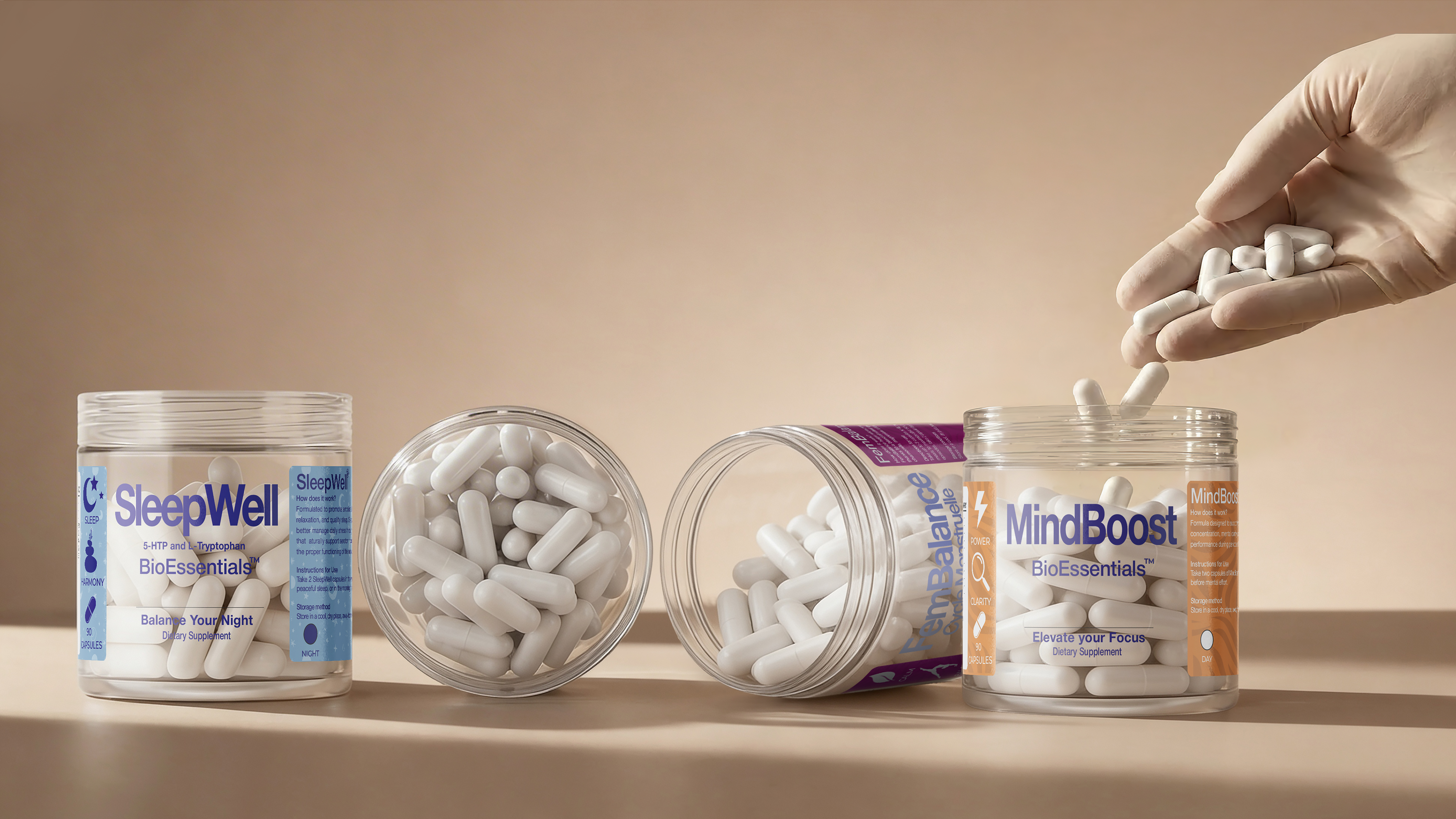
At BioEssentials, FEMBALANCE for hormonal support was built precisely around these principles: named bioavailable ingredients, documented mechanisms, clean-label credentials, and published outcome data. If you are looking for a formula that addresses the root causes of monthly discomfort rather than masking the most visible symptoms, it is a strong place to start. Explore the full BioEssentials range for further targeted, science-forward options.
Frequently asked questions
What ingredients are best in a thoughtfully designed monthly comfort formula?
Synergistic blends combining magnesium bisglycinate, standardised botanical extracts such as KSM-66® ashwagandha, and B vitamins are most effective. Multi-ingredient formulas improved PMS symptoms in 77% of users across four cycles.
How can I tell if a formula’s clean label claims are real?
Look for fully transparent ingredient lists, individual dose disclosure, third-party testing certificates, and published clinical data. A clean-label formula with high bioavailability achieved 91% user satisfaction in published research.
Are single-herb PMS supplements as good as blended ones?
Single herbs such as chasteberry or magnesium have real but limited benefits. Multi-synergistic formulas target PMS multifactorially and consistently deliver stronger, broader symptom relief.
Why does bioavailability matter in monthly comfort formulas?
Higher bioavailability means your body actually absorbs and uses the active ingredients rather than excreting them. In high-bioavailability products, this translates directly into measurable improvements in user-reported symptoms and satisfaction.
Recommended
- How to choose supplements that truly support your health — BioEssentials
- How to choose a hair supplement: 5 criteria beyond biotin — BioEssentials
- How to choose the best daily liver support formula — BioEssentials
- How to choose a blood sugar support supplement: 5 criteria — BioEssentials
- How to choose a myo-inositol supplement: 5 criteria — BioEssentials
Our research and formulas have been recognized by leading media outlets such as Marie Claire.
Scientific References
- Clinical evidence on Dihydromyricetin efficacy and safety (PubMed)
- Mechanisms of action and bioavailability of Dihydromyricetin (PMC)
- Evidence-based review: Dihydromyricetin supplementation outcomes (PubMed)
These statements have not been evaluated by the Food and Drug Administration. BioEssentials products are food supplements intended to support general wellness and daily nutritional needs. They are not intended to diagnose, treat, cure, or prevent any disease. Always consult a healthcare professional before starting any new supplement if you are pregnant, breastfeeding, taking medication, or managing a health condition.


