
Tilläggsstapling: Synergi, säkerhet och välbefinnande
TL;DR
- Supplement synergy amplifies benefits when nutrients work together strategically.
- Interactions between supplements can enhance or block absorption and effectiveness.
- Personalized stacks based on bloodwork and goals maximize safety and results.
Table of Contents
- Table of Contents
- Table of Contents
- Key Takeaways
- What is supplement stacking?
- How supplement stacking works: The science of synergy
- Risks and common pitfalls with supplement stacking
- How to safely design your supplement stack
- Expert perspectives: Debates and evolving science
- When to seek guidance and adapt your approach
- Explore science-backed supplement stacks at BioEssentials
Table of Contents
- Table of Contents
- Key Takeaways
- What is supplement stacking?
- How supplement stacking works: The science of synergy
- Risks and common pitfalls with supplement stacking
- How to safely design your supplement stack
- Expert perspectives: Debates and evolving science
- When to seek guidance and adapt your approach
- Explore science-backed supplement stacks at BioEssentials
Table of Contents
- Key Takeaways
- What is supplement stacking?
- How supplement stacking works: The science of synergy
- Risks and common pitfalls with supplement stacking
- How to safely design your supplement stack
- Expert perspectives: Debates and evolving science
- When to seek guidance and adapt your approach
- Explore science-backed supplement stacks at BioEssentials
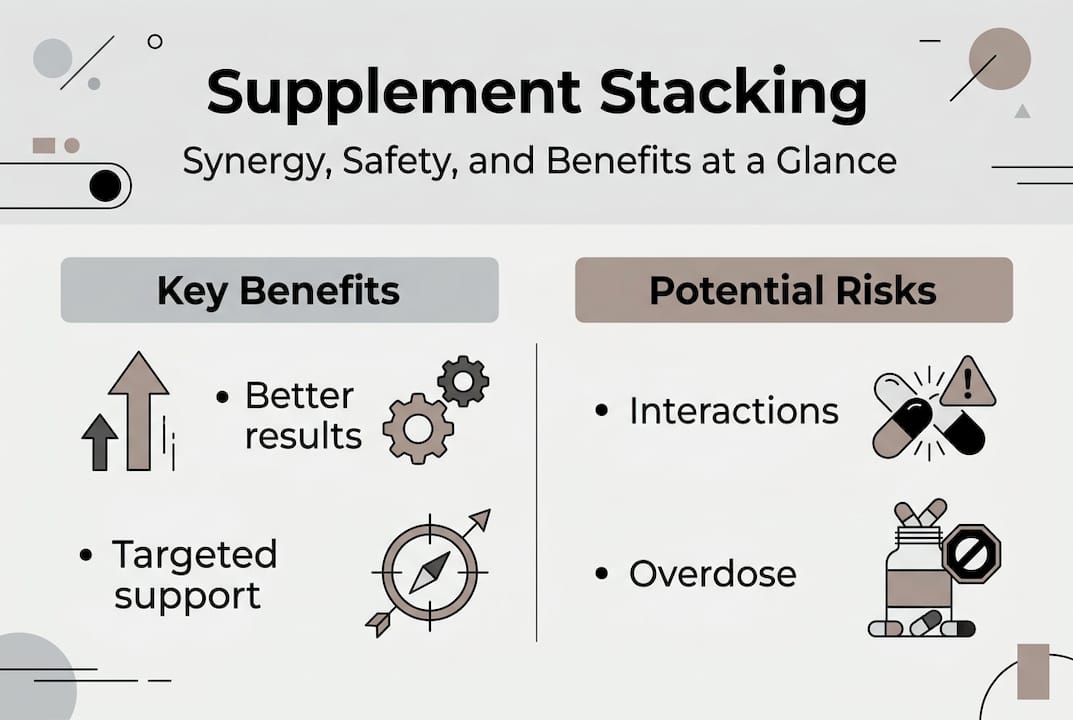
Taking more supplements does not automatically mean better results. Supplement stacking, the practice of combining two or more nutrients or compounds to amplify their effects, is one of the most talked-about strategies in natural wellness circles right now. Proponents emphasize nutrient synergy while critics warn of overload. The truth sits somewhere in between, and understanding both sides is what separates a stack that transforms your health from one that quietly works against you. This article covers the basics, the science, the real risks, and a practical roadmap for doing it right.
Key Takeaways
| Point | Details |
|---|---|
| Stacking amplifies benefits | When done thoughtfully, combining supplements can create synergy and improve results. |
| Interactions matter | Some nutrients can block or amplify each other, so careful planning may help support risk. |
| Personalization is key | Bloodwork, symptoms, and goals help you adjust and optimize your stack safely. |
| Expert guidance recommended | Professional input ensures your supplement combinations are effective and safe. |
What is supplement stacking?
Supplement stacking simply means taking a deliberate combination of supplements together, or in a timed sequence, to achieve a specific health outcome. Rather than relying on a single nutrient to do all the work, stacking leverages the way certain compounds interact to produce effects that none of them could achieve alone. Think of it like a well-coordinated team versus a solo player.
The practice gained traction in the fitness world, where athletes combined protein, creatine, and amino acids to maximize performance. Today, stacking goals have expanded well beyond the gym. Common targets include:
- Energy and cellular vitality
- Immune system resilience
- Cognitive sharpness and focus
- Bone density and joint support
- Gut health and digestion
The mechanics are rooted in nutrient synergy, where supplements improve absorption, activate shared biological pathways, or address complementary nutritional needs at the same time. This is fundamentally different from simply taking multiple supplements out of habit.
“A well-designed stack is not about quantity. It is about choosing nutrients that genuinely work better together than they do apart.”
Understanding supplement safety is the essential...
How supplement stacking works: The science of synergy
Understanding what stacking is naturally leads to the how. How do these combinations truly work to enhance your health? The answer lies in three core mechanisms: improved bioavailability, pathway activation, and complementary coverage.
Take the classic bone health trio. Vitamin D3 paired with K2 and Magnesium is one of the most well-researched stacks available. D3 increases calcium absorption, K2 directs that calcium into bones rather than arteries, and magnesium activates D3 itself. Remove any one of these three and the whole system underperforms. That is synergy in action.
In the fitness space, combining creatine with beta-alanine has shown up to 30% better performance in strength and endurance compared to either compound alone. Creatine fuels short bursts of power while beta-alanine buffers the acid buildup that causes muscle fatigue. They target different bottlenecks in the same process.
| Stack | Goal | Key mechanism |
|---|---|---|
| Vitamin D3 + K2 + Magnesium | Bone and cardiovascular health | Absorption and calcium direction |
| Creatine + Beta-Alanine | Strength and endurance | Energy and acid buffering |
| Citicoline + L-Tyrosine + Phosphatidylserine | Cognitive focus | Neurotransmitter support |
| NAD+ + Resveratrol + Magnesium | Cellular energy and vitality | Mitochondrial activation |
For cognitive goals, a cognitive synergy formula that combines...magnesium synergy support blend using...
Pro Tip: Before building a stack, write down your top one or two health goals. Every ingredient you add should have a clear, evidence-based reason for being there. If you cannot explain why it belongs, it probably does not.
Risks and common pitfalls with supplement stacking
While the synergy is appealing, it is just as critical to understand what can go wrong if you mismanage your supplement stack. The most common mistake is assuming that more ingredients equal more results. They do not.

The four main risk categories are:
Overloading: Taking too many supplements stresses your liver and kidneys, which process and filter everything you consume.
Redundancy: Stacking two supplements that do the same thing, like multiple B-complex products, can push certain nutrients into toxic ranges without you realizing it.
Negative interactions: Calcium blocks the absorption of magnesium, iron, and zinc when taken together. Fat-soluble vitamins like A, D, E, and K accumulate in tissue and can reach harmful levels with excessive supplementation.
Medication overlap: Supplements like fish oil, vitamin E, and CoQ10 can interact with blood thinners and other prescriptions in ways that are not always obvious.
Here are the most common stacking mistakes, in order of how often they derail people:
- Taking calcium and magnesium at the same time and wondering why neither seems to work
- Doubling up on fat-soluble vitamins across multiple products without checking total doses
- Adding supplements without checking for interactions with existing medications
- Ignoring timing and taking everything at once rather than spacing doses strategically
- Never reassessing the stack after the first few weeks
The stacking risk overview from nutrition experts makes it clear: wrong combinations can backfire, sometimes significantly. Reviewing supplement interaction safety before you start is not optional, it is essential.
Pro Tip: Start with the lowest effective dose of each new supplement and add one at a time. This way, if something causes a reaction, you know exactly what triggered it.
How to safely design your supplement stack
Armed with risk awareness, you are ready for practical steps to craft a stack that fits your wellness goals, safely and smartly. The process does not need to be complicated, but it does need to be intentional.
Follow this stepwise approach:
- Set a clear health goal. Bone health, energy, cognition, and gut support each call for different ingredients.
- Review the evidence. Only include supplements with research behind the specific combination, not just the individual nutrients.
- Check for interactions. Use a pharmacist, physician, or a reliable interaction checker before finalizing your stack.
- Time your supplements correctly. Space competing minerals 2 to 3 hours apart and take fat-soluble vitamins with meals that contain healthy fats.
- Start low and adjust. Begin with minimal doses, observe your body’s response over two to four weeks, and scale up only if needed.
- Cycle if appropriate. Some supplements, like adaptogens, work better with periodic breaks to may help support tolerance.
Here is a sample of proven stacks organized by goal, using the optimization strategies recommended by nutrition researchers:
| Health goal | Key ingredients | Primary benefit |
|---|---|---|
| Bone health | D3, K2, Magnesium | Calcium absorption and direction |
| Cellular energy | NAD+, Resveratrol, Shilajit | Mitochondrial support |
| Gut and digestion | Prebiotics, Probiotics (20B CFU) | Microbiome balance |
| Cognitive focus | Citicoline, Uridine, L-Tyrosine | Neurotransmitter production |
For cellular energy, the energy stack example combining NAD+,...gut health stack with both...
Expert perspectives: Debates and evolving science
Even with clear best practices, opinions differ. Here is what experts on both sides have to say about supplement stacking.
Optimists in the nutrition science community point to the compounding benefits of well-designed stacks, arguing that the human body evolved to receive nutrients in combination, not in isolation. Food itself is a natural stack. Isolating single nutrients and expecting dramatic results misses how biology actually works.
“Synergy is not a marketing term. It is a biochemical reality. The right combinations genuinely outperform the sum of their parts.”
Cautionary voices, however, raise valid concerns. Critics warn of overload, redundancy, and toxicity risks when stacking is done without testing or professional guidance. The supplement industry is not as tightly regulated as pharmaceuticals, which means product quality and dosing accuracy vary widely.
Key questions that the science has not fully resolved yet include:
- How do individual genetic differences affect nutrient absorption and synergy?
- What are the long-term effects of sustained multi-supplement stacking?
- How do microbiome variations change the way stacked supplements are metabolized?
The stacking debates among experts are healthy and ongoing. The takeaway is not to avoid stacking but to approach it with the same rigor you would apply to any health decision.
When to seek guidance and adapt your approach
As you experiment, it is essential to know when to pause and get professional input, ensuring your path to wellness is both effective and safe. Self-experimentation has limits, and recognizing those limits is a sign of smart health management.
Here are the situations that call for professional guidance before continuing:
- You are managing a chronic condition like thyroid disease, diabetes, or cardiovascular issues
- You take prescription medications daily, even if they seem unrelated to your supplement goals
- You have been stacking for four or more weeks with no noticeable improvement
- You experience new symptoms such as digestive upset, fatigue, or mood changes after starting a stack
- You are pregnant, breastfeeding, or planning to become pregnant
When you do consult a professional, bring a complete list of everything you take, including doses and timing. A functional medicine doctor or registered dietitian can order bloodwork to identify deficiencies and confirm whether your stack is actually moving your markers in the right direction.
Personalizing via bloodwork, starting low, cycling when needed, and tracking symptoms over time is the framework that separates effective stacking from guesswork. Reviewing supplement safety regulations also helps you understand what quality standards to look for when choosing products.
Explore science-backed supplement stacks at BioEssentials
You now have the knowledge to build a stack that is purposeful, safe, and aligned with your specific wellness goals. The next step is finding products that actually deliver on their ingredient promises.
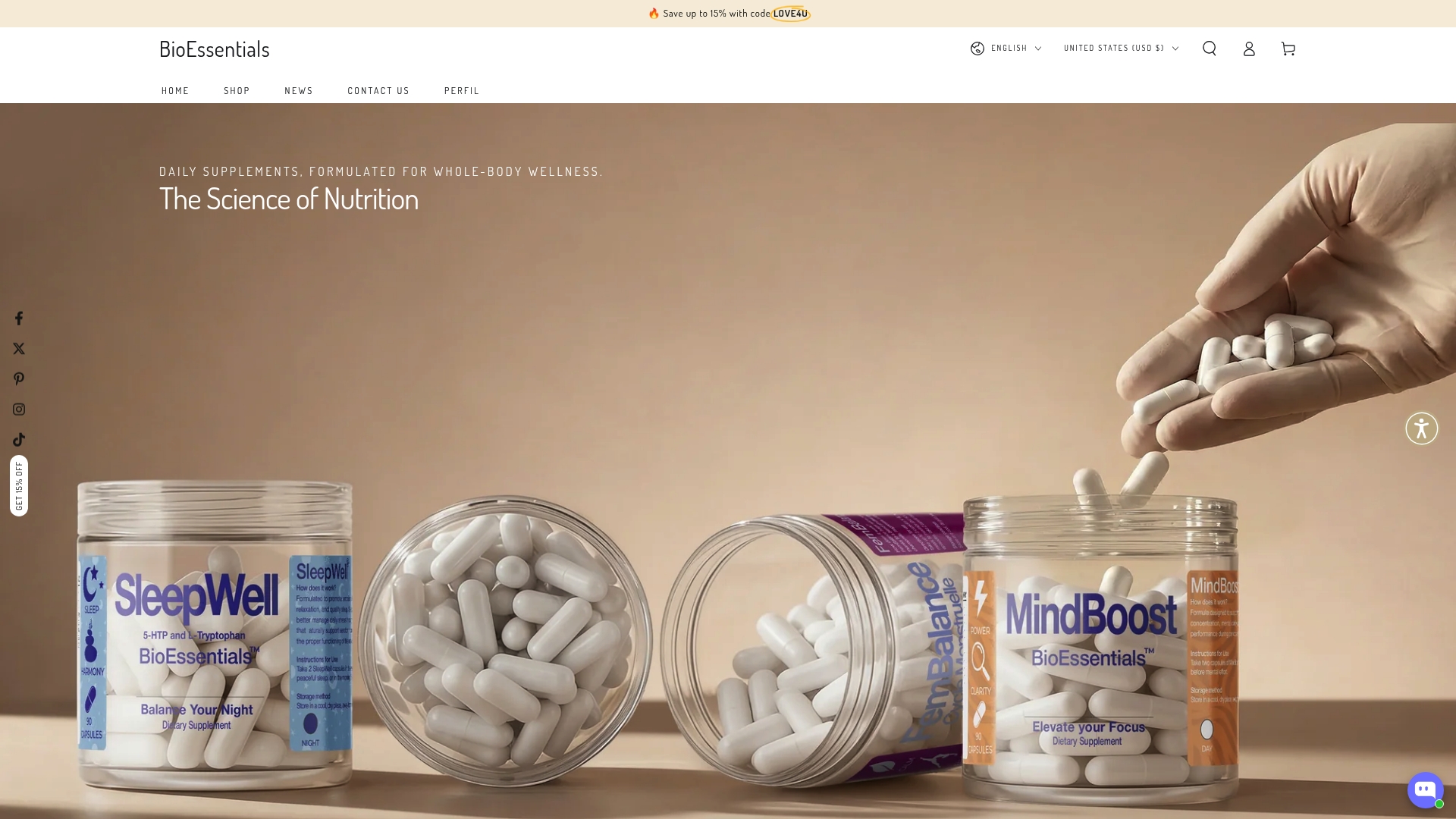
At BioEssentials, every formula is built around clinically researched, highly bioavailable ingredients. Whether you are looking to sharpen your focus with the MindBoost stack, support liver support and next-day recovery with the Night Recovery wellness support stack,...all supplement stacks and find...
Frequently asked questions
What are the most popular supplement stacks?
Top stacks include vitamin D3 with K2 and magnesium for bone health, and creatine with beta-alanine for strength and endurance performance.
How do I know if my supplement stack is working?
Track energy, mood, sleep, and labs over at least four weeks and adjust based on measurable changes, ideally with professional guidance.
Can supplement stacking be dangerous?
Yes. Wrong combinations can backfire, causing nutrient imbalances, toxicity, or conflicts with medications if you skip interaction checks and start at high doses.
Should I stack supplements if I already take medication?
Medication interactions should be checked with a physician first, as certain supplements can alter how drugs are absorbed or metabolized in the body.
Recommended
- How to stack magnesium: 5 BioEssentials formulas explained — BioEssentials
- Multi-pathway liver support: the new standard — BioEssentials
- How to choose supplements that truly support your health — BioEssentials
- How to choose a beauty supplement from within: 5 criteria — BioEssentials
- How to choose a hair supplement: 5 criteria beyond biotin — BioEssentials
Our research and formulas have been recognized by leading media outlets such as Marie Claire.
Scientific References
- Clinical evidence on Lactobacillus efficacy and safety (PubMed)
- Mechanisms of action and bioavailability of Lactobacillus (PMC)
- Evidence-based review: Lactobacillus supplementation outcomes (PubMed)
These statements have not been evaluated by the Food and Drug Administration. BioEssentials products are food supplements intended to support general wellness and daily nutritional needs. They are not intended to diagnose, treat, cure, or prevent any disease. Always consult a healthcare professional before starting any new supplement if you are pregnant, breastfeeding, taking medication, or managing a health condition.
Before combining anything, it is fair to ask who checked it. BioEssentials publishes the official reference numbers issued by eight European authorities, alongside Eurofins analysis of the finished product.


