
Wybierz suplementy wspomagające cykl w prosty i skuteczny sposób
Table of Contents
- Key Takeaways
- What actually matters in a cycle support supplement?
- How to read the label: Purity, safety, and efficacy
- Keep it simple: Steps to choosing your supplement
- Common pitfalls and myths about cycle support supplements
- Our honest perspective: Not everything needs to be complicated
- Ready for clarity? Discover evidence-backed supplements
TL;DR:
- Choose supplements with clinically studied ingredients targeting physical and emotional PMS symptoms.
- Read labels carefully, prioritizing third-party verified products with proper dosages and minimal fillers.
- Consistent use over two months is essential for noticeable PMS symptom improvement.
Picking a cycle support supplement should not feel like sitting an exam you haven’t studied for. Yet so many women end up paralysed in the health aisle, staring at ingredient lists the length of a novel, wondering whether they actually need all seventeen of those compounds. They don’t. Research consistently shows that targeted, evidence-based formulas with a handful of clinically studied ingredients outperform complicated stacks that promise everything and deliver confusion. This guide walks you through four straightforward steps so you can match a supplement to your actual symptoms, read a label with confidence, and stop second-guessing yourself every month.
Key Takeaways
| Point | Details |
|---|---|
| Evidence-based choices | Supplements with proven ingredients like herbals, select vitamins, and zinc are best for PMS support. |
| Third-party certification | NSF, USP, or ConsumerLab seals indicate verified quality, purity, and label accuracy. |
| Simplicity works | Choosing one or two well-chosen supplements is more effective than a crowded cabinet. |
| Consistency is key | Clinical improvements are seen with regular use over 1-2 cycles—don’t give up too soon. |
What actually matters in a cycle support supplement?
With the confusion out of the way, let’s see what truly counts when picking a supplement for your menstrual cycle.
Not every ingredient listed on a shiny bottle has genuine science behind it. The ones that do tend to target two broad symptom categories:physical symptomssuch as bloating, cramping, and breast tenderness, andemotional symptomssuch as mood swings, irritability, and anxiety in the lead-up to your period. A good cycle support supplement focuses on at least one of these clusters with clinically researched compounds rather than throwing twenty micronutrients into a capsule and hoping for the best.
The evidence base here is more robust than most people realise. Clinical trials show that herbal and vitamin blends like PMSoff significantly reduce PMS and PMDD symptom scores (DRSP scores, P=0.001) after just two months of consistent use, that FemmeBalance improves PSST scores by up to 40%, and that zinc meaningfully reduces both physical and psychological PMS symptoms. These are not marketing claims. They are measurable outcomes from well-designed studies.
So which ingredients should you actually be looking for? Here is a focused breakdown:
| Ingredient | Mechanism | Symptom target |
|---|---|---|
| Vitex agnus-castus (chasteberry) | Modulates prolactin and progesterone balance | Mood swings, breast tenderness |
| Vitamin B6 | Supports serotonin synthesis | Irritability, low mood, fatigue |
| Zinc | Reduces prostaglandin-driven inflammation | Cramping, physical discomfort |
| Magnesium | Relaxes smooth muscle, calms the nervous system | Bloating, sleep disruption, anxiety |
| Saffron extract | Upregulates serotonin pathways | Mood, stress amplification |
If a product features most of these in theirbest PMS supplement ingredients form...
The key lesson:prioritise outcome over quantity. A supplement containing five proven actives is almost always more useful than one boasting thirty ingredients at doses too small to matter. TheFEMBALANCE approach is a clear...
- Look for transparency around dosage, not just ingredient lists
- Prioritise compounds with at least two published human clinical trials
- Avoid products that use “proprietary blends” to hide exact quantities
- Focus on mechanisms that match your dominant symptom pattern
Pro Tip: If you struggle most with emotional symptoms like irritability and low mood, prioritise Vitex and B6. If physical symptoms like cramping dominate, look for zinc and magnesium at meaningful doses.
How to read the label: Purity, safety, and efficacy
Knowing which ingredients work is just the start — understanding exactly what’s in your supplement matters, too.
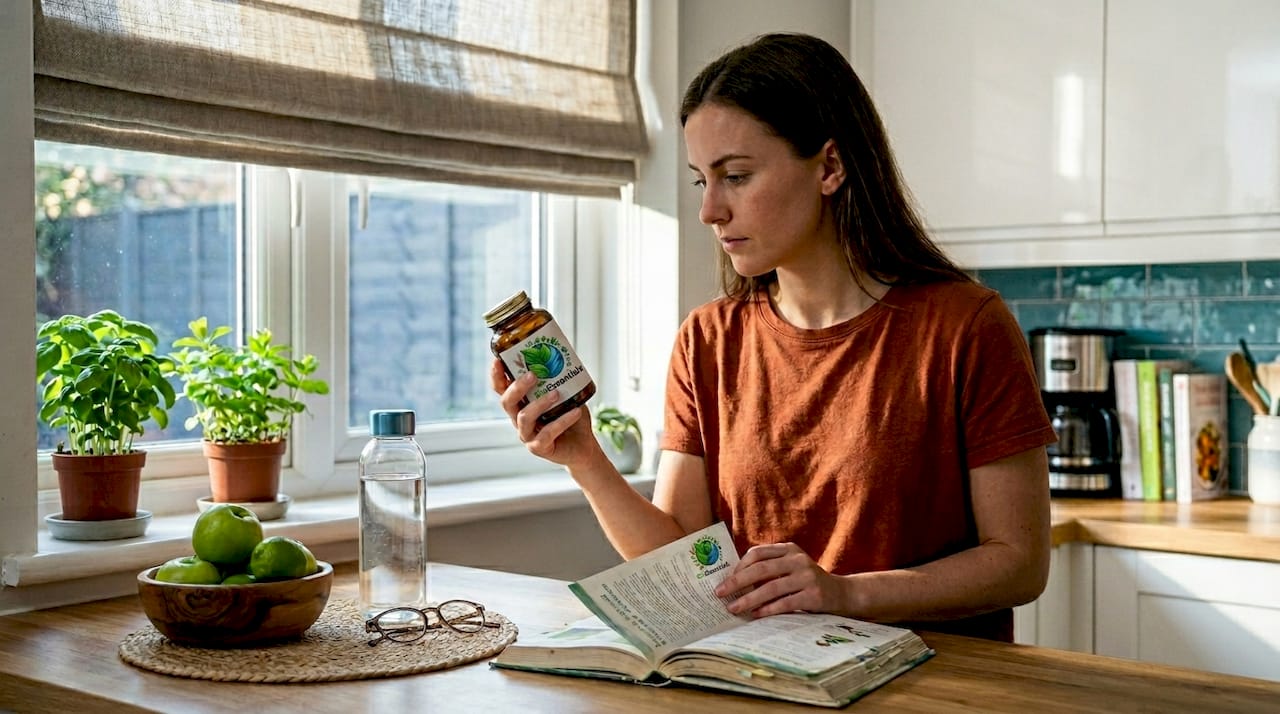
Labels can feel like a foreign language, but once you know what to look for, reading one takes under two minutes. The most important thing to check before anything else is whether the product has been independently verified.Third-party certifications such as NSF,...
Here is a practical, step-by-step process for reading any supplement label:
- Find the serving size first.Everything else on the label is calculated per serving, so this number sets the context for all the doses you are about to read.
- Scan the active ingredients.These are the compounds doing the actual work. Note their doses in milligrams (mg) or micrograms (mcg) and compare them to amounts used in clinical research.
- Check the “other ingredients” section.This is where fillers, artificial colours, and unnecessary additives hide. A clean formula should have a short, recognisable list here.
- Look for a third-party seal.NSF, USP, or ConsumerLab logos on the packaging mean the product has been independently tested.Quality supplement safety resources can...
- Assess usability.How many capsules per serving? Do you need to take them with food? A supplement you cannot realistically fit into your daily routine will not help you, regardless of its ingredient quality.
| Label element | What to look for | Red flag |
|---|---|---|
| Active ingredients | Clinically studied compounds at research doses | Proprietary blends with hidden amounts |
| Other ingredients | Short list, recognisable names | Artificial dyes, hydrogenated oils |
| Third-party seal | NSF, USP, ConsumerLab logos | No testing information whatsoever |
| Serving size | One or two capsules per day | Six or more capsules for a single dose |
| Manufacturer info | Contact details, country of manufacture | No address or vague “manufactured in” claims |
Words like “advanced formula,” “super blend,” and “maximum strength” are marketing language, not quality indicators. They tell you nothing about the clinical relevance of the doses inside. Equally, terms like “all natural” or “plant-based” say nothing about whether a product has been tested or whether its doses actually achieve anything measurable.
Pro Tip: Before purchasing, search the product name alongside “third-party tested” or look it up directly on the ConsumerLab website. Independent verification is the fastest shortcut to confidence when you’re learninghow to choose supplements that genuinely work.
Keep it simple: Steps to choosing your supplement
After learning how to read the label, you might wonder how to quickly narrow your options without stress.
The four steps below are designed to move you from overwhelmed to decided in one sitting. They work whether you’re browsing online or standing in a shop.
Step 1: Identify your primary symptoms.Before you read a single label, write down your two or three most disruptive PMS symptoms. Are they physical, like cramping and bloating? Emotional, like mood swings and irritability? Or do you struggle most with sleep disruption and stress amplification in the week before your period? Your symptoms are your filter. Everything that doesn’t address them is irrelevant, regardless of how well marketed it is.
Step 2: Match symptoms to ingredient mechanisms.Once you know your dominant symptom cluster, you can map it to the ingredients listed in the table in the previous section. Cramping and physical discomfort point towards zinc and magnesium. Mood and emotional volatility point towards B6, Vitex, and saffron. Sleep disruption often responds to magnesium’s calming effect on the nervous system.
Step 3: Choose a formula that covers at least two mechanisms in one product.This is where the guidance from supplement selection tips becomes practical. You do not need a separate product for each symptom. In fact, stacking multiple single-ingredient supplements without medical guidance can lead to unintentional overdosing and unnecessary expense. A well-designed multi-mechanism formula covers your main symptom clusters at clinically relevant doses in one convenient product.
Step 4: Verify clean-label credentials and daily usability.NSF, USP, or ConsumerLab certification, a short other-ingredients list, and a serving size you can realistically maintain every day — these are your final checkboxes before committing.
- Write down your top two or three PMS symptoms
- Match them to specific ingredient mechanisms using a reference table
- Shortlist products that address at least two mechanisms in one formula
- Check for a third-party quality seal
- Confirm the serving size is manageable daily
Give any new supplement at leasttwo full menstrual cyclesbefore evaluating whether it is working.Mindful supplementation habits research consistently...
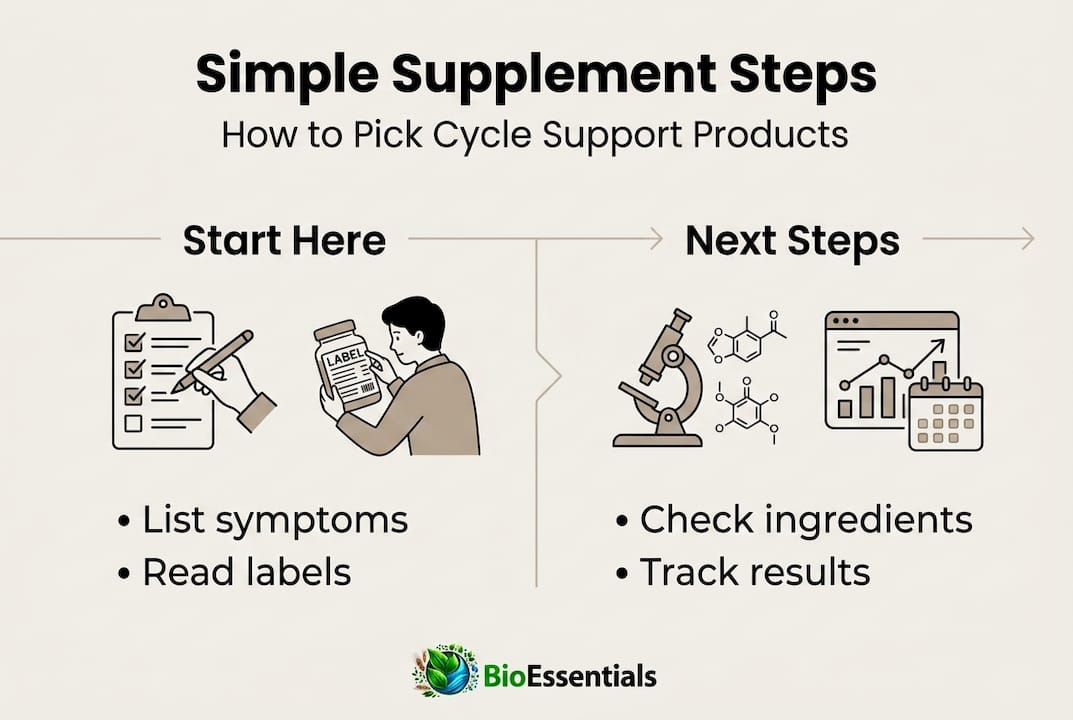
Pro Tip: Set a calendar reminder on the first day of your next cycle to note any symptom changes. Two months of simple notes is far more useful than trying to rely on memory when deciding whether a supplement is genuinely helping.
Common pitfalls and myths about cycle support supplements
It’s just as important to know what to watch out for as it is to know what to look for.
The supplement market is filled with genuinely helpful products, but also with persistent myths that waste women’s time and money. Here are the most common ones, broken down plainly.
Myth: More supplements mean better results.This is perhaps the most expensive mistake women make. Taking six different single-ingredient capsules is not six times more effective than taking one well-formulated multi-mechanism product. The body has limits on absorption, andsupplement stacking mistakes can cause...
Mistake: Ignoring clinical evidence in favour of trends.Wellness trends move fast, and social media platforms regularly elevate ingredients with little or no human clinical data. An ingredient might show promising results in a lab or in animal studies, but that doesn’t mean it will reliably help your PMS symptoms. Always ask: has this been tested in women with PMS symptoms in a controlled trial?
Myth: All-natural always means safe or effective.“Natural” is not a synonym for safe, and it certainly isn’t a guarantee of efficacy. Many natural compounds interact with medications, and many more are simply ineffective at the doses commonly used in supplements. Evidence-based PMS support always references clinical trials, not just traditional use or anecdotal reports.
Mistake: Switching products too often without giving them time.Hormonal cycles are slow-moving by nature. Clinical research confirms that meaningful symptom reduction from PMS supplements typically becomes measurable after two months of consistent use, not after two weeks. Abandoning a product after one cycle because you haven’t noticed dramatic changes is one of the most common reasons women feel like “nothing works.”
“The most effective supplement routine is usually the simplest one you can actually maintain. Consistency beats complexity every time.”
- Avoid products with more than 15 or 20 listed active ingredients
- Don’t assume “trending” equals “clinically proven”
- Track your cycle symptoms before and after starting a supplement so you have real data
- One or two well-chosen products used consistently will outperform a drawer full of half-finished bottles
Our honest perspective: Not everything needs to be complicated
Now that you have a clear framework, it’s worth examining why so many women feel pressured to overcomplicate this process.
The wellness industry profits from complexity. The more confused you feel, the more products you might buy. But when you look at the actual research, the message is remarkably consistent: a small number of well-chosen, clinically supported ingredients, taken consistently, produce the most reliable improvements in cycle-related symptoms.
We have seen this repeatedly. Women who spend months cycling through trendy single-ingredient supplements, constantly adjusting their routine, rarely feel better than those who simply pick one formula addressing two or three core mechanisms and stick with it. The science behind evidence-based supplement habits backs this up clearly. Consistency is the variable that most reliably predicts a good outcome.
FEMBALANCE® is a product we stand behind precisely because it embodies this principle. Its three core ingredients are mapped directly to the most common PMS symptom clusters, providing meaningful coverage without requiring you to build a complicated stack. You don’t need to be a nutritional biochemist to use it effectively. You just need to take it consistently.
Simplicity, done well, is not a shortcut. It’s the destination.
Ready for clarity? Discover evidence-backed supplements
If you’re ready to simplify your supplement routine, here’s an easy way to put this guide into action.
At BioEssentials, every formula we offer is built around the principle you’ve read throughout this article: fewer, better ingredients, independently verified, at clinically relevant doses. We don’t believe you should need a spreadsheet to manage your cycle support routine.
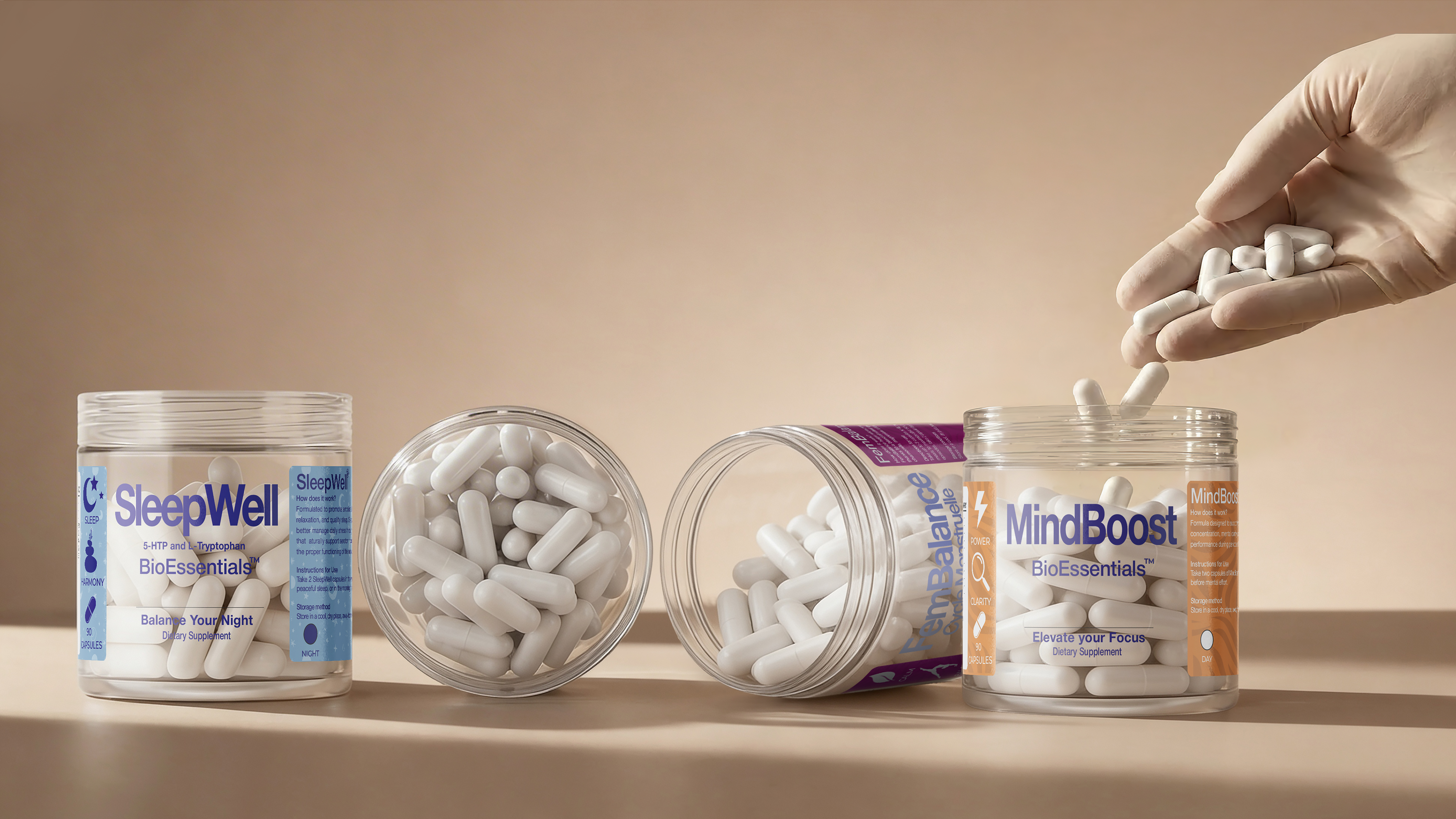
Explore ourcycle-supporting formulas and see exactly...Browse BioEssentials and find the...
Frequently asked questions
What is the most important certification for supplement safety?
NSF, USP, or ConsumerLab certification means a supplement’s purity and label accuracy have been independently verified by a third party, giving you the highest level of confidence in what you’re taking.
How quickly do PMS cycle support supplements work?
Clinical studies show that measurable improvements in PMS symptoms typically appear after two full months of consistent use, so patience and regularity are essential when starting any new formula.
What ingredients should I prioritise when choosing a cycle supplement?
Focus on compounds with strong clinical backing, particularly herbal blends like Vitex, vitamins such as B6, and minerals including zinc, all of which significantly reduce PMS symptoms in well-designed human trials.
Is it better to take multiple supplements or just one?
One or two well-formulated, evidence-based supplements used consistently will almost always deliver better results than a complicated stack of single-ingredient products that’s harder to maintain and easier to abandon.
Recommended
- How to choose an immunity mushroom supplement: 5 criteria — BioEssentials
- How to choose the right magnesium supplement: the 5-form buyer's guide — BioEssentials
- How to choose a focus supplement: 5 expert criteria — BioEssentials
- Multi-pathway liver support: the new standard — BioEssentials
- Sleep supplements: why the best go beyond melatonin — BioEssentials
Our research and formulas have been recognized by leading media outlets such as Marie Claire.
Scientific References
- Clinical evidence on Citicoline efficacy and safety (PubMed)
- Mechanisms of action and bioavailability of Citicoline (PMC)
- Evidence-based review: Citicoline supplementation outcomes (PubMed)
These statements have not been evaluated by the Food and Drug Administration. BioEssentials products are food supplements intended to support general wellness and daily nutritional needs. They are not intended to diagnose, treat, cure, or prevent any disease. Always consult a healthcare professional before starting any new supplement if you are pregnant, breastfeeding, taking medication, or managing a health condition.


