
Tietoinen täydentäminen: näyttöön perustuvia tapoja hyvinvointiin
Table of Contents
- Table of Contents
- Table of Contents
- Key Takeaways
- What is mindful supplementation?
- The science behind mindful supplementation
- How to practise mindful supplementation in daily life
- Limitations, controversies, and individual variability
- Why mindful supplementation matters more than ever in 2026
- Upgrade your wellbeing: science-backed support from BioEssentials
Table of Contents
- Table of Contents
- Key Takeaways
- What is mindful supplementation?
- The science behind mindful supplementation
- How to practise mindful supplementation in daily life
- Limitations, controversies, and individual variability
- Why mindful supplementation matters more than ever in 2026
- Upgrade your wellbeing: science-backed support from BioEssentials
Table of Contents
- Key Takeaways
- What is mindful supplementation?
- The science behind mindful supplementation
- How to practise mindful supplementation in daily life
- Limitations, controversies, and individual variability
- Why mindful supplementation matters more than ever in 2026
- Upgrade your wellbeing: science-backed support from BioEssentials
TL;DR:
- Mindful supplementation involves deliberate, evidence-based choices based on genuine needs. It emphasizes awareness, careful evaluation, and regular reassessment of supplement use. The most supported supplements are omega-3s, multivitamins, and vitamin D, while many marketed products lack strong evidence.
Taking more supplements does not automatically mean better health. Many people fill their bathroom cabinets with a dozen bottles, yet still feel tired, foggy, or out of balance. The supplement industry was valued at over £150 billion globally in 2025, and the marketing noise has never been louder. What cuts through that noise is mindful supplementation: a deliberate, evidence-informed approach that prioritises what your body actually needs over what is currently trending. In the sections ahead, you will find practical steps, research benchmarks, and the honest limitations that most supplement guides skip entirely.
Key Takeaways
| Point | Details |
|---|---|
| Science over trends | Mindful supplementation uses solid evidence to select only the most beneficial supplements. |
| Personalisation is key | Your needs are unique, so supplement routines should be tailored and regularly reviewed with professional input. |
| Quality and timing matter | High-quality, third-party tested supplements taken at the correct times work best. |
| Supplements are not supports | Mindful use supports, but does not replace, a healthy lifestyle and medical care. |
What is mindful supplementation?
Mindful supplementation is not a branded programme or a wellness trend. It is amindset: the intentional, research-informed use of supplements based on genuine need, quality evidence, and honest self-awareness. It stands apart from both aggressive marketing and blanket scepticism, finding a grounded middle path where science and self-knowledge meet.
The word “mindful” here carries real weight. It draws on three principles borrowed from mindfulness practice:
- Awareness: Recognising what your body genuinely needs, not what an influencer recommends.
- Non-judgement: Evaluating supplements on merit rather than hype or dismissal.
- Deliberate action: Making choices that are considered, timed, and regularly reassessed.
Applied to supplementation, these principles become practical criteria. You ask: Is there credible evidence for this supplement? Do I have a personal need for it? Is it sourced from a high-quality manufacturer? Does it integrate with my broader lifestyle, including sleep, diet, and exercise?
This is fundamentally different from picking up whatever is on offer or following a supplement stack blindly copied from a fitness forum. Personalising supplement choices based on...
Mindful supplementation also means knowing what you arenot taking, and why. Choosing to skip a supplement because the evidence is weak or your diet already provides sufficient levels is just as important as choosing to add one.
“Mindful supplementation blends mindfulness principles with evidence-based supplement use for holistic vitality.” This is not about following a rigid protocol; it is about cultivating a thoughtful, ongoing relationship with your own wellbeing.
This approach also guards against a common trap: thinking that because something is natural, it is automatically safe or beneficial. Many natural compounds interact with medications, become harmful at high doses, or simply do not work for the majority of people. Mindful supplementation supports that nuance with the seriousness it deserves, making it both safer and more effective over time.
The science behind mindful supplementation
Once you understand what mindful supplementation means in principle, the next step is knowing which supplements actually have strong evidence behind them and which do not.
Researchers broadly divide supplements into two categories.Foundational supplements include nutrients like omega-3 fatty acids, multivitamins, vitamin D, and magnesium. These address widespread deficiencies and have the most robust clinical trial data.Accessory or targeted supplements include more specialised products aimed at specific goals such as cognitive performance, liver support, or sleep quality. Their evidence base is more variable and often more context-dependent.
Foundational supplements like omega-3 and multivitamins have the most evidence; accessory supplements show considerably more variable impact depending on population and dose.

For omega-3s specifically, the clinical benchmark is1 to 2.5 grams daily over at least six months to observe meaningful effects on inflammation and cardiovascular markers. Below that threshold, or for shorter periods, results are inconsistent.
One of the most striking findings comes from the COSMOS trial, a large-scale study in which multivitamin use slowed cognitive ageing by approximately two years compared to placebo, while omega-3 benefits for cognition were only robust in adults who were already deficient.
Here is an overview of the evidence landscape for common supplement categories:
| Supplement category | Evidence strength | Best-supported use |
|---|---|---|
| Omega-3 fatty acids | Strong | Cardiovascular, inflammation |
| Multivitamins | Moderate to strong | Cognitive ageing, general health |
| Magnesium | Moderate | Sleep, muscle function |
| Vitamin D | Moderate | Bone health, immune function |
| Brain-specific supplements | Weak to moderate | Highly individual |
| Herbal adaptogens | Variable | Stress response (context-dependent) |
It is also worth understanding the limits of current research. Many studies are short-term, funded by industry, or conducted in deficient populations, meaning results do not always translate to healthy adults with varied diets. Understanding nutrient interactions and synergy is...
The takeaway is not that supplements are ineffective. It is that the evidence is precise, not blanket. Knowingwhichsupplement, atwhichdose, forwhichperson, is exactly what makes the mindful approach so valuable.
How to practise mindful supplementation in daily life
Understanding the evidence is only half the work. The other half is putting it into action consistently and intelligently.
Here is a practical step-by-step process:
- Assess your needs honestly. Start with a blood panel if possible. Identify actual deficiencies or risk factors rather than assumptions.
- Consult a healthcare professional. A GP, dietitian, or qualified nutritionist can help interpret your results and flag interactions with any medications you take.
- Source verified products. Look for supplements that carry third-party certification. Finding high-quality supplements means prioritising...
- Align timing with biology. Fat-soluble vitamins such as A, D, E, and K are best taken with a meal containing dietary fat. Magnesium is often most effective in the evening. Separate iron and calcium by at least two hours, as they compete for absorption. Prioritise your foundational supplements before adding any accessory products.
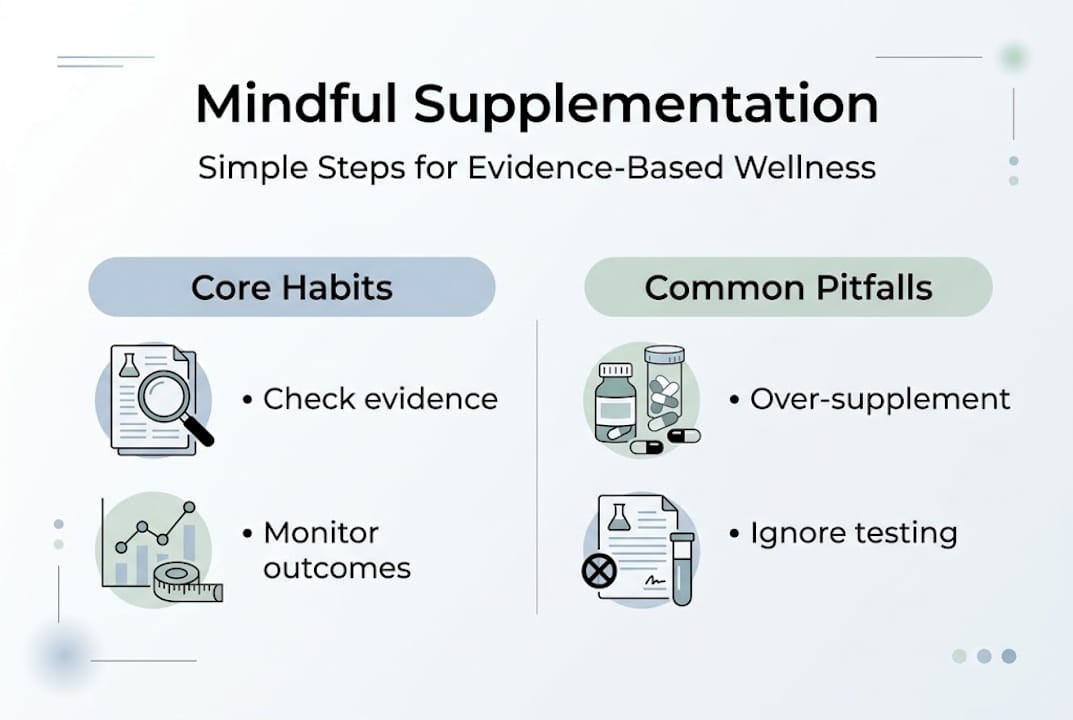
- Monitor your response. Keep a simple journal noting energy levels, sleep quality, and any side effects over four to eight weeks.
Common pitfalls to avoid include over-supplementation (more is rarely better and can cause toxicity with fat-soluble nutrients), ignoring lifestyle fundamentals like sleep and diet, and adding multiple new supplements simultaneously so that you cannot identify what is or is not working.
Pro Tip: Run a focused self-experiment. Introduce one new supplement at a time, track two or three specific outcomes over four weeks, and only then decide whether to continue. This approach gives you real, personal data rather than relying solely on population-level averages.
Quality certification matters enormously. Third-party testing by organisations such as NSF International or Informed Sport ensures the product contains what it claims, without contaminants. Tailoring regimens with medical guidance remains the gold standard for anyone managing a chronic condition or taking prescription medication.
Limitations, controversies, and individual variability
Even the most evidence-aligned approach has limits. Supplements in the UK and EU are regulated as food products, not medicines. That means manufacturers are not legally required to prove efficacy before a product reaches the shelf. Consumers need to know this, not to distrust all supplements, but to apply rigorous judgement.
Supplements are not FDA-regulated for efficacy; most brain health supplements lack clinical evidence and should be avoided particularly in certain populations including those with dementia.
The comparison below illustrates the gap between what is marketed and what is validated:
| Supplement | Evidence-based claim | Common marketing claim |
|---|---|---|
| Omega-3 | Reduces triglycerides at 2–4g/day | “Boosts brain power instantly” |
| Vitamin D | Supports bone density when deficient | “may help support all infections” |
| Bacopa monnieri | Modest memory support in older adults | “Supercharge your memory” |
| Ginkgo biloba | Little consistent evidence | “may help support cognitive decline” |
Placebo effects in supplement research are also substantial. Studies show that people whobelievethey are taking an effective supplement often report improvements regardless of the active ingredient. This is not a reason to dismiss supplements, but it is a reason to demand proper double-blind trials before forming conclusions.
Individual variability is high and no universal efficacy exists across populations; polypharmacy also raises serious interaction risks, particularly in older adults taking multiple prescription drugs.
Pro Tip: If you have been taking a supplement for three months with no noticeable benefit and no measurable change in relevant blood markers, it is a strong signal to reassess. Continuing out of habit is not mindful supplementation.
Special populations need particular caution. Those managing dementia, pregnant women, and anyone on anticoagulants, immunosuppressants, or other long-term medications should always seek medical review before adding any supplement. The mindful approach insists on personalising supplement routines and recognises that safe supplement stacking requires knowing the full picture of your health.
Why mindful supplementation matters more than ever in 2026
Here is an uncomfortable truth most wellness content avoids: the supplement industry profits most when you stay confused. New products launched with bold claims, influencer endorsements replacing peer review, and a constant churn of “breakthrough” ingredients keep people buying rather than thinking.
What we have seen, time and again, is that the greatest health gains do not come from finding the perfect stack. They come fromrealistic, consistent integration of a small number of well-chosen supplements into an otherwise solid lifestyle. The people who benefit most are not those chasing novelty; they are those who reassess regularly, act on evidence, and resist the pull of marketing.
The discipline to question what you are taking, and why, is a genuine act of self-care. Practising supplement stacking wisely means building habits that compound over months and years, not just reacting to the latest trend. In 2026, that discipline is not just useful. It is essential.
Upgrade your wellbeing: science-backed support from BioEssentials
If this guide has made you want to apply a more intentional approach, BioEssentials is designed for exactly that kind of thinking.
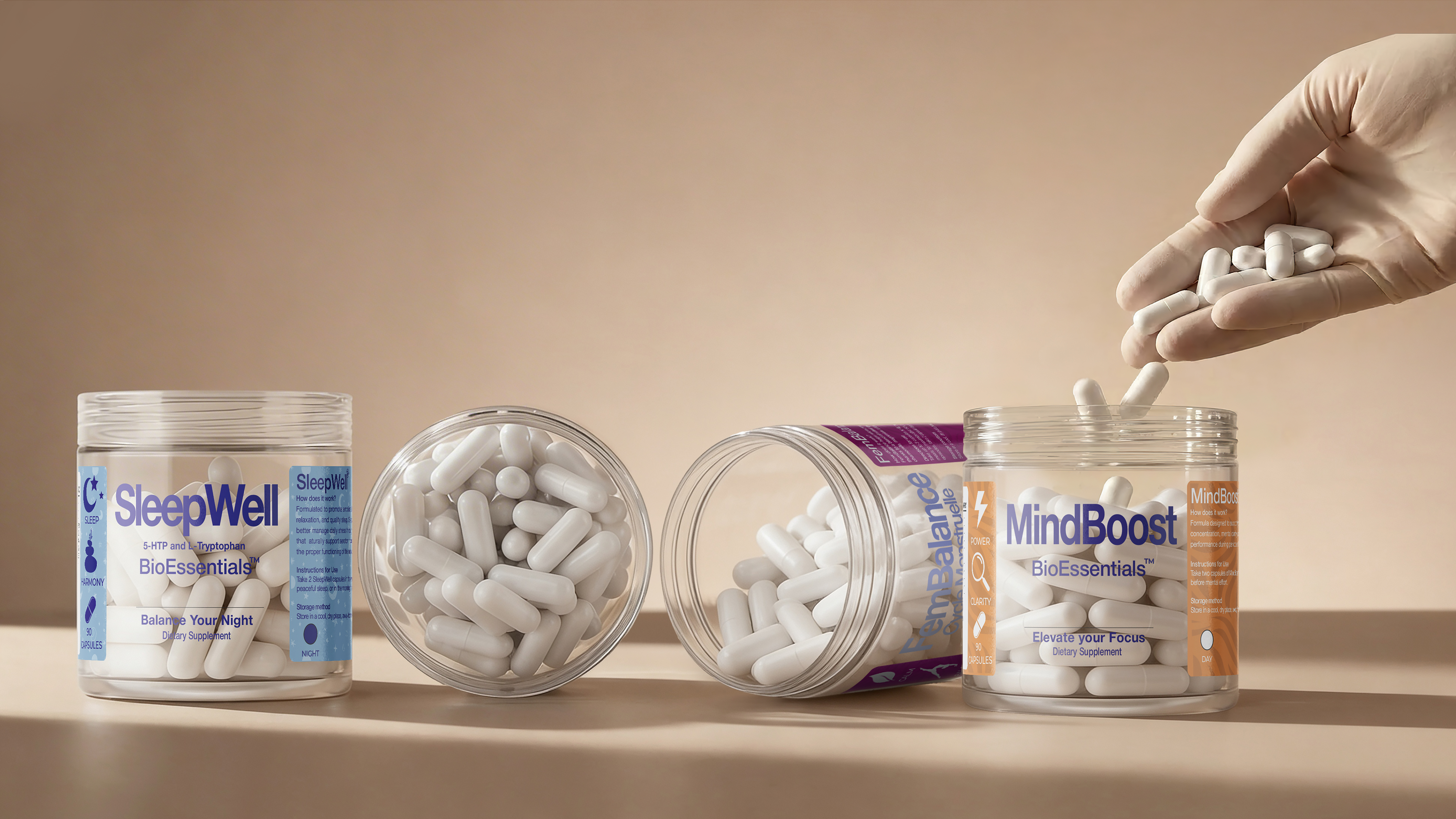
Every product in the range is built around clinically researched, highly bioavailable ingredients, with transparent labelling and quality assurance at the core. Whether you are exploring MindBoost cognitive support, looking for...Night Recovery DHM blend, or simply browsing the full BioEssentials range for evidence-aligned...
Frequently asked questions
How is mindful supplementation different from just taking supplements?
Mindful supplementation contrasts with trend-driven use by requiring that every choice is grounded in personal need, credible evidence, and regular reassessment rather than marketing or habit.
Which supplements have the strongest scientific support?
Omega-3s and multivitamins show the most consistent cognitive and general health benefits in clinical trials, while the majority of marketed brain-health supplements still lack robust, independent evidence.
What should I check before starting a supplement?
Confirm a genuine personal need through testing or professional assessment, then choose products that are quality-verified by health professionals and carry recognised third-party certification for purity and potency.
Can supplements replace a healthy lifestyle?
No. Supplements support, not substitute, the foundations of good nutrition, regular movement, consistent sleep, and appropriate medical care. They work best when layered on top of those fundamentals.
Recommended
- How to choose a blood sugar support supplement: 5 criteria — BioEssentials
- How to choose an immunity mushroom supplement: 5 criteria — BioEssentials
- How to choose supplements that truly support your health — BioEssentials
- Ingredient deep dive: DHM, Hovenia, and Milk Thistle — BioEssentials
- Metabolic flexibility: why blood sugar matters more than calories — BioEssentials
Our research and formulas have been recognized by leading media outlets such as Marie Claire.
Scientific References
- Clinical evidence on Dihydromyricetin efficacy and safety (PubMed)
- Mechanisms of action and bioavailability of Dihydromyricetin (PMC)
- Evidence-based review: Dihydromyricetin supplementation outcomes (PubMed)
These statements have not been evaluated by the Food and Drug Administration. BioEssentials products are food supplements intended to support general wellness and daily nutritional needs. They are not intended to diagnose, treat, cure, or prevent any disease. Always consult a healthcare professional before starting any new supplement if you are pregnant, breastfeeding, taking medication, or managing a health condition.


