
Kuinka valita paras päivittäinen maksan tukikaava
Table of Contents
- Key Takeaways
- Understanding liver health and daily support needs
- Key ingredients: What the science really says
- Quality and safety: Certifications that matter
- Recognising red flags and avoiding common pitfalls
- How to compare formulas and make a confident choice
- The uncomfortable truth about liver supplements (and what actually works)
- Find your science-backed liver support formula
TL;DR:
- Most liver support claims are marketing fiction; the liver naturally filters toxins continuously.
- Effective liver support involves transparent, evidence-backed ingredients like silymarin and NAC.
- Prioritize lifestyle changes over supplements for lasting liver health and safety.
Walk into any health shop or browse online for five minutes and you will find dozens of products promising to “liver support” your liver, “support liver function,” or “RESTORE” your liver to peak condition overnight. Most of these claims are not supported by clinical evidence, and some products actively cause harm. Choosing a daily liver support formula is not about finding the most dramatic promise on a label. It is about understanding five concrete criteria, grounded in science, that separate genuinely useful formulas from expensive noise. This guide walks you through each criterion clearly, so you can make a confident, informed choice.
Key Takeaways
| Point | Details |
|---|---|
| Science trumps hype | Choose supplements with research-backed ingredients rather than catchy marketing claims. |
| Certifications matter | Third-party labels like USP and NSF GMP help assure safety and quality but not efficacy. |
| Beware of red flags | Avoid formulas with vague claims, no clear labelling, or a lack of published test results. |
| Lifestyle is foundational | Supplement use must always complement healthy habits—not replace them. |
| Compare before buying | Use a clear checklist of evidence, transparency, and certification to guide your purchase. |
Understanding liver health and daily support needs
Your liver is one of the hardest-working organs in your body. It filters blood, metabolises nutrients, produces bile for digestion, regulates blood sugar, and neutralises compounds ranging from alcohol to pharmaceutical drugs. It does this continuously, around the clock, without any help from a supplement.
So why consider a daily liver support formula at all? Because certain well-researched ingredients can help the liver manage oxidative stress, support enzyme function, and assist recovery from metabolic load. The key word issupport, not replace. The liver has its own sophisticated liver function support machinery. No supplement switches that machinery on or off.
What concerns us is the language used by many products on the market. Terms like “liver support,” “cleanse,” and “flush” are marketing constructs, not medical descriptions. They create the impression of a liver clogged with toxins that needs periodic purging. That is not how liver biology works. The liver does not store toxins waiting to be flushed out. It processes and eliminates them continuously.
More importantly, some products marketed this way carry real risks. Research shows that herbal and dietary supplements are linked to approximately 16% of drug-induced liver injury (DILI) cases, often due to product variability, contamination, or undisclosed ingredients. That figure should give any informed buyer pause.
“Supplements do not support liver disease. Herbal and dietary supplement-related liver injury accounts for a significant proportion of DILI cases, driven by product variability and adulteration.” — National Institutes of Health
True daily support comes from well-researched, safe ingredients at disclosed doses, manufactured under verified conditions. Oursupplement safety guide covers the...
What genuine liver support looks like:
- Ingredients with published clinical data on liver enzyme markers or oxidative stress
- Transparent dosing, not hidden in proprietary blends
- Manufacturing under certified Good Manufacturing Practice (GMP) conditions
- Language that is regulatory-compliant, not sensationalised
Key ingredients: What the science really says
With a clearer picture of what real liver support means, the next step is recognising which ingredients have genuine scientific backing and which are simply popular.
Silymarin (milk thistle extract)is the most studied liver support ingredient in the world. Silymarin is the active compound extracted from the milk thistle plant (Silybum marianum). Multiple meta-analyses show it reduces liver enzymes ALT and AST, two key markers of liver stress. One review reported a standardised mean difference of -0.67 for AST and -0.52 for ALT, indicating a measurable reduction in liver inflammation markers. The clinical relevance varies depending on the condition and the dose, but the direction of evidence is consistent.
N-Acetyl Cysteine (NAC)is a precursor to glutathione, the liver’s primary antioxidant. Without adequate glutathione, the liver cannot efficiently neutralise reactive oxygen species generated during liver function support. NAC is so well-established that it is used in hospitals as a treatment for paracetamol overdose. For daily liver support, it helps maintain the antioxidant reserves that the liver draws on constantly. You can read more aboutNAC liver benefits in our dedicated guide.
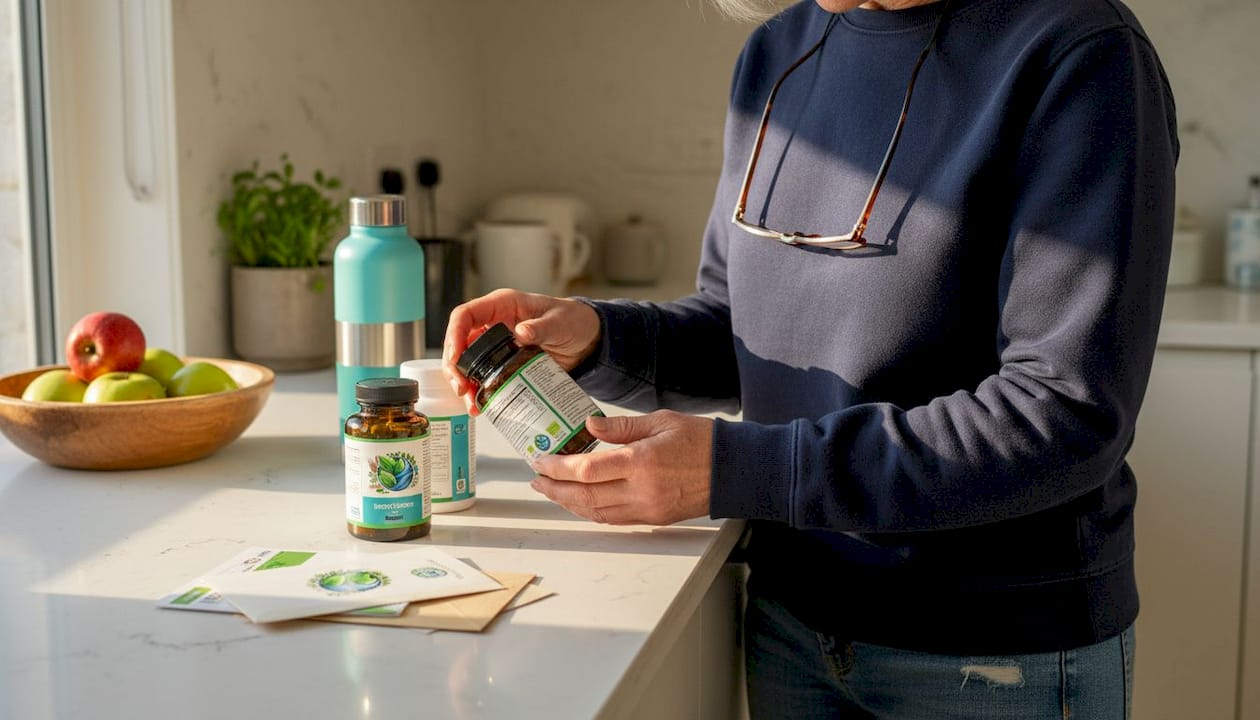
Vitamin Eshows some promise specifically in metabolic dysfunction-associated steatotic liver disease (MASLD, formerly known as NAFLD). However, it is not universally recommended and carries risks at high doses, particularly for men. It is not a general-purpose liver support ingredient.
Ingredients to approach with caution:Kava, comfrey, and certain Ayurvedic blends have documented associations with liver toxicity. Their presence in a formula is a red flag, not a selling point.
| Ingredient | Evidence level | Primary mechanism | Cautions |
|---|---|---|---|
| Silymarin | Strong (meta-analyses) | Antioxidant, anti-inflammatory | Generally well tolerated |
| NAC | Strong (clinical use) | Glutathione precursor | Rare GI side effects |
| Vitamin E | Moderate (MASLD specific) | Antioxidant | Risk at high doses |
| Artichoke extract | Emerging | Bile flow support | Limited long-term data |
| Kava | Negative evidence | None validated | Documented hepatotoxicity |
Pro Tip: If you are new to liver support supplements, begin with a formula that clearly lists each ingredient and its dose. Proprietary blends that group multiple ingredients under a single milligram total make it impossible to know whether you are receiving a therapeutic dose of anything. Look forevidence-based ingredients with disclosed quantities.
Quality and safety: Certifications that matter
Once you have identified a promising ingredient list, the next question is whether what is on the label is actually in the bottle, in the right amount, and free from contaminants. This is where third-party certifications become essential.
The supplement industry is not as tightly regulated as pharmaceuticals. Manufacturers are largely responsible for their own quality control. Third-party certification bodies audit that process independently. Third-party certifications such as USP Verified, NSF GMP, and NSF Contents Certified verify purity, potency, and that the product is free from common contaminants including heavy metals, pesticides, and microbial contamination.
The four most meaningful certifications for liver support supplements:
- USP Verified— Confirms the product contains the declared ingredients at the stated potency, and that it will dissolve properly in the body.
- NSF GMP Registered— Confirms the manufacturing facility meets Good Manufacturing Practice standards. This covers the process, not just the finished product.
- NSF Contents Certified— Goes further by testing the actual product for label accuracy and contaminants.
- ISO 17025 accredited laboratory testing— Indicates the testing lab itself meets international standards for technical competence.
| Certification | What it audits | Guarantees efficacy? |
|---|---|---|
| USP Verified | Ingredients, potency, dissolution | No |
| NSF GMP | Manufacturing process | No |
| NSF Contents Certified | Label accuracy, contaminants | No |
| NSF Certified for Sport | Above plus banned substances | No |
None of these certifications guarantee that a supplement will improve your liver health. They guarantee that what is in the bottle matches what is on the label, and that it was made in a clean, controlled environment. That is the minimum standard you should accept. You can review our approach tosupplement certifications to understand how we apply these standards.
Pro Tip: If you are an athlete subject to anti-doping rules, NSF Certified for Sport is the most relevant certification. It specifically screens for substances prohibited by the World Anti-Doping Agency (WADA).
Recognising red flags and avoiding common pitfalls
Understanding quality is crucial, but knowing what to avoid is equally important, especially as some pitfalls are not immediately obvious to even experienced supplement buyers.
The most common red flag is language. Any product that promises to “liver support,” “cleanse,” “flush,” or “regenerate” your liver is making a claim that current science does not support. These terms are not regulated in the same way as medical claims, which is precisely why they are used so freely. They create an emotional response without requiring clinical evidence.
“The liver does not require periodic flushing. It is a self-regulating organ. Products claiming otherwise are selling a concept that has no physiological basis.”
Warning signs to look for on any label:
- Proprietary blends with no individual ingredient doses disclosed
- Claims of “100% natural” without any certification to verify purity
- Testimonials substituting for clinical evidence
- No batch testing information or certificate of analysis available
- Ingredients with documented hepatotoxicity (liver toxicity) included in the formula
The risk is real. Herbal and dietary supplements account for a substantial proportion of liver injury cases, and many buyers do not connect their supplement use to subsequent health problems. This is partly because the onset of supplement-related liver injury can be delayed by weeks or months.
If you have an existing liver condition, take prescription medications, or are pregnant or breastfeeding, you must speak with your doctor before starting any liver support formula. This is not a precautionary disclaimer. It is a clinical necessity. Some ingredients interact directly with drug metabolism pathways in the liver. Our article onliver support vs science examines...
How to compare formulas and make a confident choice
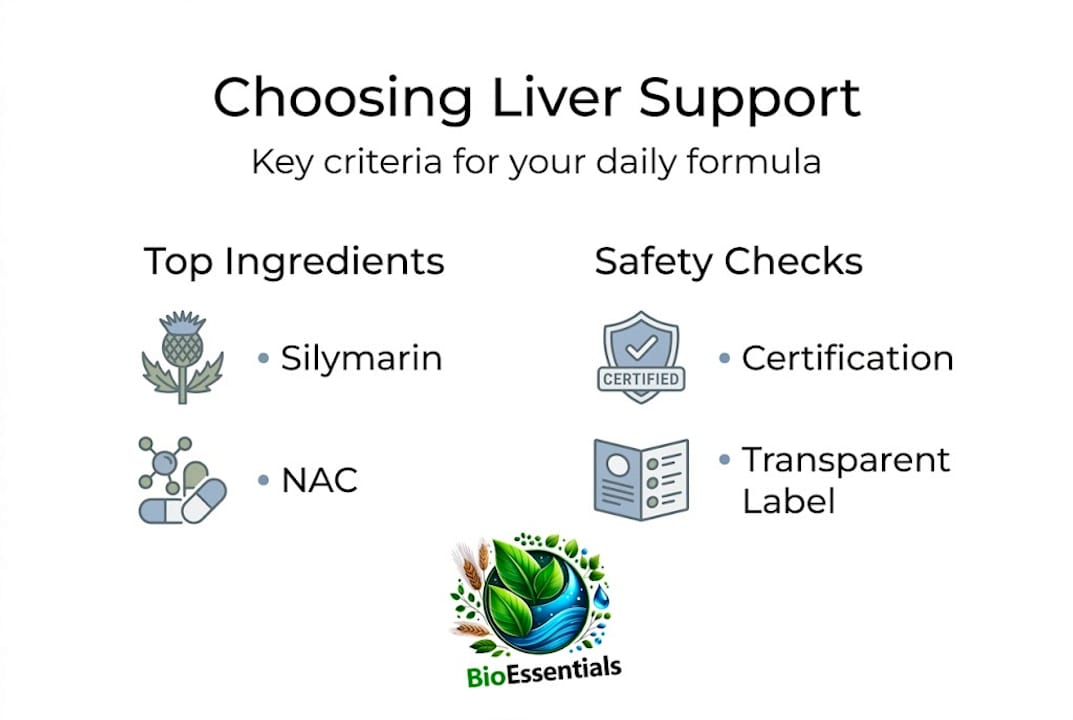
Knowing the pitfalls, it is time to apply everything into a practical five-point framework. This is the buyer’s checklist we recommend for evaluating any daily liver support formula.
The five-point evaluation framework:
Formula completeness— Does the product address more than one liver pathway? A formula that only contains milk thistle addresses oxidative stress but ignores glutathione support, bile flow, or mitochondrial function. Broader, multi-pathway formulas provide more comprehensive daily support.
Ingredient evidence— Are the key ingredients supported by published clinical research? Silymarin and NAC have the strongest evidence base. If a formula leads with trendy but unproven ingredients, support that as a warning sign.
Transparent dosing— Are individual ingredient doses clearly stated? A formula listing “Liver Support Blend: 500mg” containing five ingredients tells you nothing useful. You need to know whether each ingredient is present at a clinically relevant dose.
Regulatory-compliant language— Does the brand avoid making “liver support,” “cleanse,” or “support” claims? Brands that stay within evidence-based language demonstrate respect for both the science and the consumer.
Third-party testing by a named laboratory— Can the brand provide a certificate of analysis from an independent, accredited laboratory? Not just a claim of testing, but an actual document with batch numbers and results.
Now, how does PUREDETOX® measure against these criteria?
| Criterion | Basic milk thistle product | PUREDETOX® |
|---|---|---|
| Formula completeness | Single ingredient | Multi-pathway formula |
| Ingredient evidence | Silymarin only | Silymarin + NAC + supporting compounds |
| Transparent dosing | Often disclosed | Fully disclosed per ingredient |
| Regulatory-compliant language | Variable | Compliant, no liver support claims |
| Named third-party testing | Rarely available | Batch-tested, certificate available |
PUREDETOX® is designed around the five criteria above. It combines silymarin and NAC with supporting ingredients at disclosed doses, uses regulatory-compliant language, and provides batch testing documentation. You can see a detailed breakdown in ourcompare liver support article.
Pro Tip: Before purchasing any formula, request or download the certificate of analysis for the specific batch. Reputable brands make this readily available. If a brand cannot or will not provide one, that tells you everything you need to know.
The uncomfortable truth about liver supplements (and what actually works)
Here is something the supplement industry rarely says plainly: no formula, however well formulated, will compensate for a consistently poor diet, excessive alcohol consumption, chronic sleep deprivation, or a sedentary lifestyle. That is not pessimism. It is biology.
We have seen buyers invest significantly in high-quality liver support formulas while continuing habits that actively stress the liver. They support the supplement as insurance, a way of offsetting damage rather than reducing it. This is the most common and most costly mistake in the supplement space.
Lifestyle changes consistently outperform supplements in clinical research. Reducing alcohol, increasing dietary fibre, managing body weight, and improving sleep quality produce measurable improvements in liver enzyme markers that most supplements can only modestly replicate. The Mayo Clinic and the NIH are explicit on this point: supplements have limited evidence and are not substitutes for foundational lifestyle improvements.
What a well-formulated supplementcando is provide meaningful support within an already healthy framework. If you are eating well, exercising regularly, and keeping alcohol to sensible levels, then a formula like PUREDETOX® orNight Recovery liver support can...
Our honest position is this: use supplements to support a healthy lifestyle, not to replace one. When you approach them that way, the five-point framework above becomes genuinely useful rather than just a purchasing exercise.
Find your science-backed liver support formula
If you have worked through this guide and you are ready to apply these criteria to a real product, BioEssentials has done the groundwork for you.
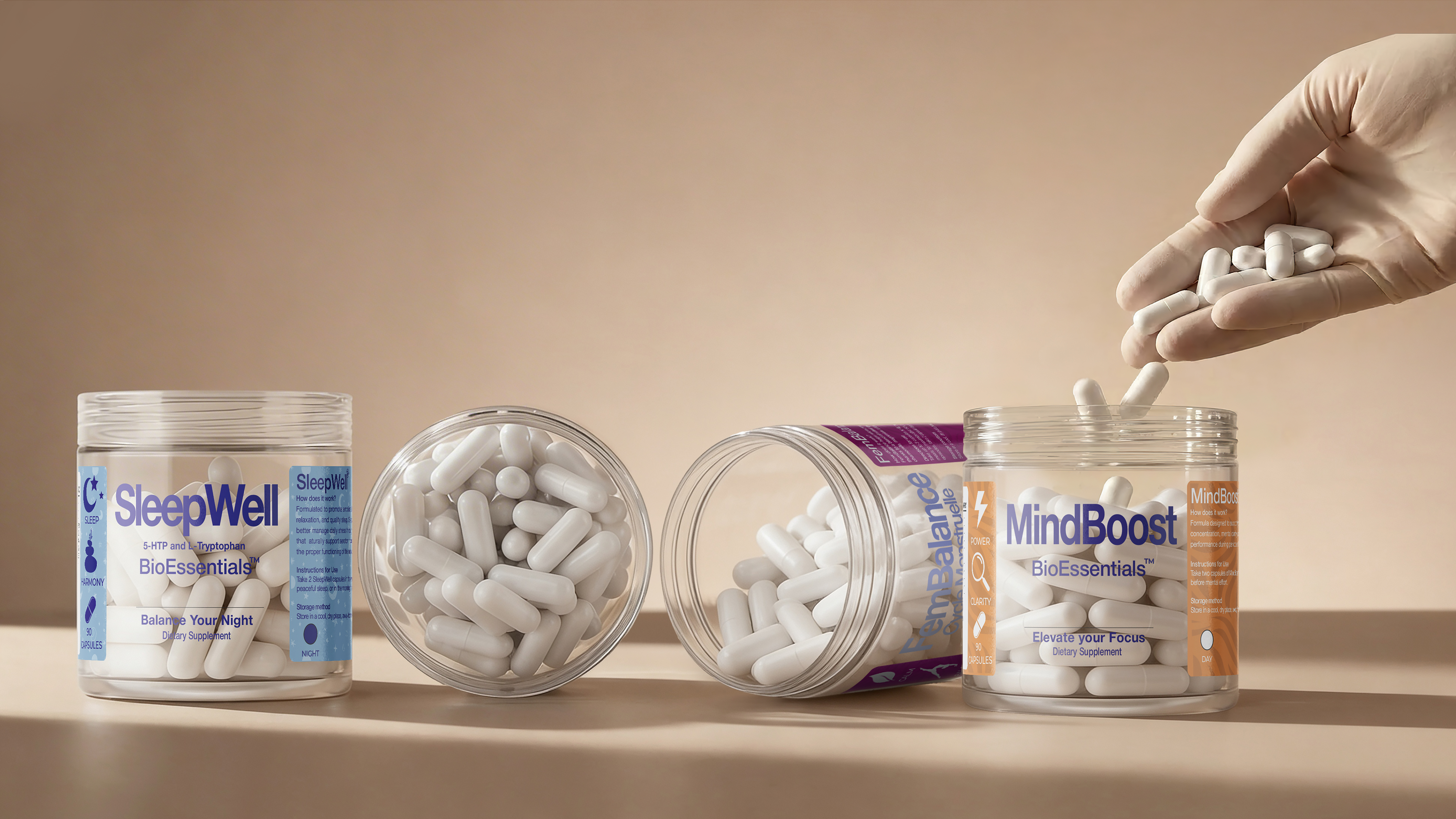
Our formulas are developed around clinically researched ingredients at transparent doses, manufactured under GMP-certified conditions, and batch-tested by independent laboratories.PUREDETOX daily support is our...Night Recovery liver support addresses...BioEssentials science-backed range to find...
Frequently asked questions
Can daily liver support formulas prevent or support liver disease?
No supplement can prevent or support liver disease. Supplements do not support liver disease and may cause harm if contaminated or misused. Always prioritise medical advice and proven lifestyle changes over any supplement.
What certifications guarantee supplement safety?
No certification guarantees clinical benefit, but USP Verified and NSF GMP help ensure a supplement’s purity, potency, and accurate labelling, which are the minimum standards any reputable formula should meet.
Are certain ingredients more effective for daily liver support?
Silymarin and NAC are among the most studied ingredients, with consistent data on liver enzyme markers, but silymarin and NAC still work best as part of a broader healthy lifestyle rather than as standalone interventions.
Who should not take liver support supplements?
Anyone with underlying liver conditions, those taking prescription medications, and pregnant or breastfeeding women should consult a doctor before starting any liver support formula, as some ingredients interact with drug metabolism pathways.
Recommended
- Multi-pathway liver support: the new standard — BioEssentials
- How to choose a hair supplement: 5 criteria beyond biotin — BioEssentials
- How to choose supplements that truly support your health — BioEssentials
- How to choose a focus supplement: 5 expert criteria — BioEssentials
- How to choose a myo-inositol supplement: 5 criteria — BioEssentials
Our research and formulas have been recognized by leading media outlets such as Marie Claire.
Scientific References
- Clinical evidence on Dihydromyricetin efficacy and safety (PubMed)
- Mechanisms of action and bioavailability of Dihydromyricetin (PMC)
- Evidence-based review: Dihydromyricetin supplementation outcomes (PubMed)
These statements have not been evaluated by the Food and Drug Administration. BioEssentials products are food supplements intended to support general wellness and daily nutritional needs. They are not intended to diagnose, treat, cure, or prevent any disease. Always consult a healthcare professional before starting any new supplement if you are pregnant, breastfeeding, taking medication, or managing a health condition.


