
Sådan vælger du et dagligt energitilskud uden stimulanser
Table of Contents
- Key Takeaways
- Understanding energy supplementation without stimulants
- Key nutrients that support daily energy naturally
- How to verify supplement safety, quality, and effectiveness
- Smart decision-making: Testing, dosages, and when to consult a professional
- Our perspective: Why most energy supplements miss the mark
- Find science-backed daily energy support with BioEssentials
TL;DR:
- Non-stimulant supplements target cellular energy production, supporting mitochondria instead of delaying fatigue.
- Key nutrients include B vitamins, CoQ10, ashwagandha, and shilajit, each targeting different energy pathways.
- Ensuring supplement quality through third-party testing, transparency, and blood testing is essential for safety and effectiveness.
Most people reach for caffeine without questioning whether it actually solves their energy problem or simply delays it. The supplement market is saturated with products that promise sustained vitality but rely on stimulants that spike cortisol, disrupt sleep, and create dependency cycles. There is a better category of solution: non-stimulant supplements that work at the cellular level, addressing the actual reasons your energy is low. This guide walks you through a practical five-step decision framework so you can choose a daily energy supplement that genuinely supports your body, long-term, without the crash.
Key Takeaways
| Point | Details |
|---|---|
| Check for deficiencies first | Blood tests help identify which nutrients you genuinely need before supplementing. |
| Focus on non-stimulant nutrients | B vitamins, magnesium, iron, and CoQ10 support steady energy without unwanted side effects. |
| Quality and transparency matter | Choose supplements with third-party certifications to avoid contaminants and hidden stimulants. |
| Consult professionals for safety | Speak to your healthcare provider to tailor supplementation around your needs and health status. |
Understanding energy supplementation without stimulants
Before choosing any supplement, it helps to understand what you are actually buying. The energy supplement market broadly splits into two camps: stimulant-based products and cellular energy formulas. Stimulants, most commonly caffeine, synephrine, or guarana, work by triggering your adrenal glands to release adrenaline and cortisol. The result feels like energy, but it is really borrowed alertness. You are not generating more cellular fuel; you are taxing your stress response.
Non-stimulant energy supplements work differently. They target the biological processes that actually produce energy at the cellular level, primarily within the mitochondria, the organelles responsible for converting nutrients into ATP (adenosine triphosphate), the molecule your cells use as fuel. Rather than overriding your nervous system, these supplements support the machinery that already exists in your body.
Here is a clear comparison to illustrate the difference:
| Feature | Stimulant energy supplement | Cellular energy formula (REVITAL®) |
|---|---|---|
| Mechanism | Adrenal stimulation, cortisol release | Mitochondrial support, ATP production |
| Daily use suitability | Limited, tolerance builds quickly | Designed for consistent daily use |
| Tolerance risk | High, effects diminish over time | Low, supports baseline function |
| Crash risk | Yes, energy dip after peak | No, gradual and sustained support |
| Sleep impact | Disrupts sleep if taken late | Neutral to positive |
Common stimulant-related pitfalls include:
- Jitters and anxietyfrom excessive adrenal activation
- Energy crashestwo to four hours after consumption
- Sleep disruptioneven when stimulants are taken in the morning
- Dependencyas the body adapts and requires higher doses for the same effect
- Adrenal fatiguewith prolonged, heavy use
“Supplements work best when correcting deficiencies or targeting specific needs, such as CoQ10 for mitochondrial issues or adaptogens for stress-related fatigue; lifestyle foundations like sleep and diet remain essential.”
This is the key insight: no supplement, stimulant or otherwise, replaces good sleep, balanced nutrition, and regular movement. What a well-designed cellular energy formula does is fill genuine gaps in your biochemistry. If your mitochondria lack the cofactors they need to run efficiently, supplementing those cofactors is a targeted, rational intervention. You can read more about this approach in ourenergy formula overview.
Key nutrients that support daily energy naturally
Understanding how non-stimulant supplements work is only the first step. Next, let’s examine which nutrients are key and how they benefit your energy at the cellular level.
The most evidence-backed nutrients for non-stimulant energy support fall into several categories. Prioritising supplements addressing nutrient deficiencies like B vitamins, iron, magnesium, and vitamin D supports energy metabolism without stimulants, making these the logical starting point.
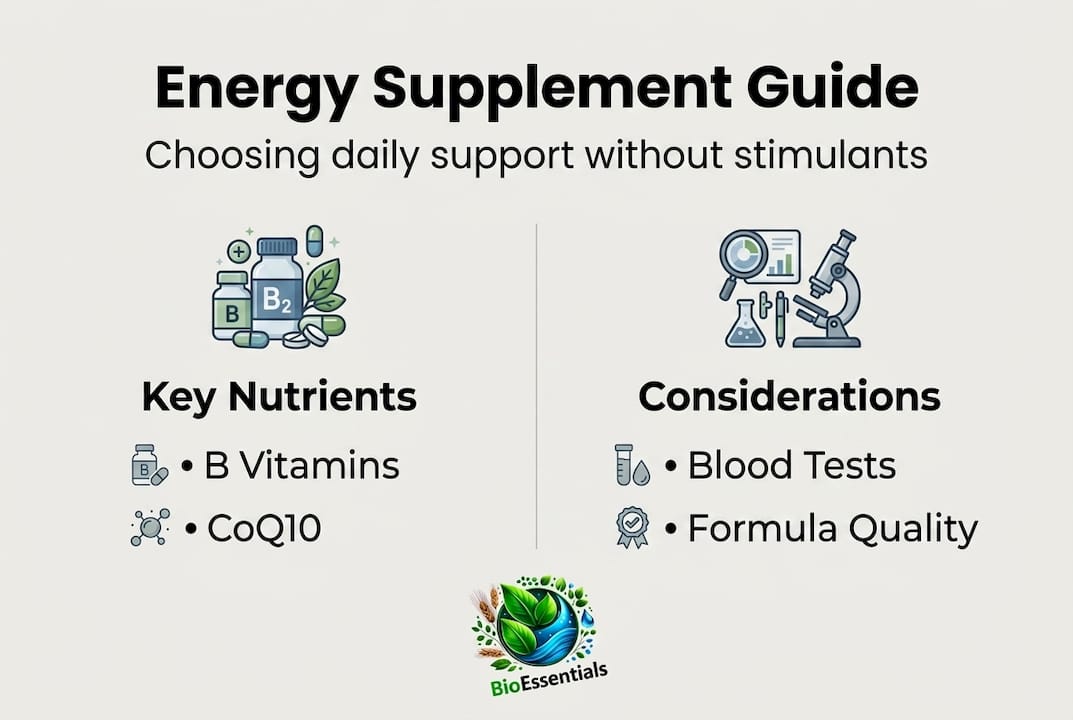
B vitaminsare essential cofactors in glycolysis and the citric acid cycle, the two core pathways your cells use to extract energy from food. Without adequate B vitamins, particularly B1 (thiamine), B2 (riboflavin), B3 (niacin), B5 (pantothenic acid), and B12, your mitochondria simply cannot run at full capacity. Vegans and older adults are especially at risk of B12 deficiency because absorption declines with age and animal products are the primary dietary source.

CoQ10(coenzyme Q10) sits at the heart of the electron transport chain inside the mitochondria, the final stage of ATP production. Without sufficient CoQ10, this chain slows down. CoQ10, B-complex, ashwagandha, and rhodiola are among the most effective non-stimulant options for supporting energy. People taking statins are particularly vulnerable to CoQ10 depletion because these medications block the same pathway used to synthesise CoQ10.
Ashwagandha(KSM-66 extract) works differently. It is an adaptogen, meaning it helps the body regulate its stress response. Chronically elevated cortisol suppresses mitochondrial function and disrupts sleep, both of which drain energy. Ashwagandha lowers cortisol, supports BDNF (brain-derived neurotrophic factor), and improves mitochondrial efficiency indirectly by reducing the physiological burden of stress.
Shilajitis a resinous compound rich in fulvic acid and dibenzo-alpha-pyrones. What makes it particularly interesting is its role as a bioavailability carrier. It enhances the absorption and cellular uptake of CoQ10 and other mitochondrial cofactors. When you see shilajit listed alongside CoQ10 in a formula, that is a positive signal that the manufacturer understands ingredient synergy, not just ingredient selection.
| Nutrient | Primary mechanism | Who benefits most |
|---|---|---|
| B vitamins (B1, B2, B3, B5, B12) | Glycolysis, ATP synthesis | Vegans, older adults, high-stress individuals |
| CoQ10 (ubiquinol form) | Electron transport chain | Statin users, adults over 40 |
| Ashwagandha (KSM-66) | Cortisol regulation, mitochondrial support | High-stress individuals, poor sleepers |
| Shilajit (fulvic acid) | Bioavailability carrier, CoQ10 enhancement | Anyone using CoQ10 or mitochondrial formulas |
| Magnesium | 300+ enzymatic reactions including ATP activation | Most adults (widespread deficiency) |
| Vitamin D | Mitochondrial gene expression | People with limited sun exposure |
Pro Tip: Before adding any of these nutrients, identify whether you actually have a deficiency. Supplementing nutrients you already have in abundance adds cost without benefit. Start with blood tests, then target the gaps. You can also explore our guide to choosing thebest magnesium supplement for your...NAD+ and energy metabolism interact at the cellular level.
How to verify supplement safety, quality, and effectiveness
Knowing which nutrients are most effective helps, but it is just as critical to ensure the supplement you pick is safe and genuinely contains what it claims to.
The supplement industry is less tightly regulated than pharmaceuticals. A product can legally go to market without proving it works, and without independent verification that its label is accurate. This means the responsibility falls on you as the consumer to apply a quality filter before purchasing.
Here is a practical five-step verification process:
Check for third-party testing.Look for certification logos from NSF International, USP (United States Pharmacopeia), or ConsumerLab on the product label or the brand’s website. Third-party testing ensures quality, purity, and label accuracy, protecting you from contaminants and unlisted stimulants. A brand that voluntarily submits to independent testing is signalling confidence in its own product.
Read the full ingredient list.Look beyond the headline ingredients. Many “natural energy” products hide caffeine under names like guarana extract, green tea extract, or kola nut. If you see any of these without clear dosage disclosure, support it as a red flag.
Assess ingredient forms.Not all forms of a nutrient are equally effective. Ubiquinol is the active, reduced form of CoQ10 and is far better absorbed than ubiquinone. KSM-66 is a clinically studied ashwagandha extract. Magnesium glycinate or malate is more bioavailable than magnesium oxide. The presence of premium forms signals that a manufacturer prioritises efficacy over cost-cutting.
Evaluate transparency.Does the brand publish its testing results? Does it explain why each ingredient is included and at what dose? Brands that invest in education and transparency are generally more trustworthy. Review ourquality certifications page and our overview of what makes trustworthy supplements genuinely reliable.
Look at independent reviews.User testimonials on a brand’s own website carry limited weight. Seek reviews on independent platforms or from registered dietitians and pharmacists who have no commercial relationship with the brand.
“A supplement that cannot tell you exactly what is in it, how it was tested, and why each ingredient was chosen at its specific dose is not a supplement worth taking.”
Understandingsupplement formula design principles also...
Smart decision-making: Testing, dosages, and when to consult a professional
Once you know how to spot a quality product, the final piece is making sure your supplement choices are truly tailored to your real needs.
The single most important step before starting any energy supplement programme is to test for deficiencies first through bloodwork for B12, iron, magnesium, and vitamin D. Excess supplementation of nutrients you already have in sufficient quantities provides no benefit and risks overload. For example, excess iron causes oxidative stress and organ damage. Too much vitamin D raises calcium levels dangerously. More is not better; targeted is better.
Key considerations for smart supplementation:
- Identify your actual gaps.A simple blood panel from your GP can reveal deficiencies in B12, ferritin (iron stores), serum magnesium, and 25-hydroxyvitamin D. These four tests cover the most common energy-related deficiencies in the general population.
- Choose bioavailable forms.As noted above, the form of a nutrient matters enormously. Prefer bioavailable forms such as ubiquinol CoQ10 and KSM-66 ashwagandha to ensure the nutrient actually reaches the tissues that need it.
- Start with one change at a time.If you introduce multiple supplements simultaneously, you cannot identify which one is helping or causing any side effect. Introduce one supplement, assess its effect over four to six weeks, then add the next.
- Respect upper tolerable limits.Every nutrient has a safe upper limit. Staying within evidence-based dosage ranges protects you from adverse effects while still delivering therapeutic benefit.
- Consult your healthcare provider if you take medications.Certain supplements interact with common medications. Ashwagandha can affect thyroid hormone levels. CoQ10 may interact with warfarin. St John’s Wort (sometimes included in energy blends) interferes with many drugs. This is non-negotiable advice.
Pro Tip: Whenchoosing the right supplements for...magnesium forms and wellness to...
REVITAL® addresses each of these criteria directly. Its four active ingredients, CoQ10 (as ubiquinol), ashwagandha (KSM-66), shilajit (standardised fulvic acid), and B-complex vitamins, are chosen for complementary mechanisms across the mitochondrial energy pathway. CoQ10 drives the electron transport chain. B vitamins fuel glycolysis and the citric acid cycle. Ashwagandha reduces cortisol-driven mitochondrial suppression. Shilajit enhances the bioavailability of CoQ10, ensuring it reaches the mitochondria where it is needed. No stimulants. No tolerance build-up. Designed for daily, long-term use.
Our perspective: Why most energy supplements miss the mark
Here is an uncomfortable truth: the vast majority of energy supplements on the market are not solving an energy problem. They are solving a marketing problem. Caffeine and stimulant blends are cheap to produce, deliver an immediate and unmistakable effect, and generate repeat purchases as tolerance builds. From a commercial standpoint, dependency is a feature, not a flaw.
The deeper issue is that most products never ask why someone is fatigued in the first place. Is it a CoQ10 deficiency from statin use? Chronic low-grade magnesium insufficiency from a processed diet? Cortisol dysregulation from years of poor sleep and high stress? Each of these requires a different targeted response. A one-size-fits-all stimulant blend addresses none of them.
Sustainable energy is not a product. It is an outcome. It emerges from adequate sleep, balanced nutrition, managed stress, and, where genuine deficiencies exist, targeted supplementation. Supplements are the last layer of the stack, not the foundation. When they are chosen based on real biological need, using evidence-backed ingredients in bioavailable forms, they genuinely move the needle. When they are chosen based on clever marketing and a familiar caffeine buzz, they simply delay the underlying problem.
This is why we advocate forevidence-based supplement habits built on...
Find science-backed daily energy support with BioEssentials
If you have worked through this guide and recognised that your energy strategy needs a genuine upgrade, BioEssentials offers a range of stimulant-free, science-backed formulas built on clinically researched ingredients in their most bioavailable forms.
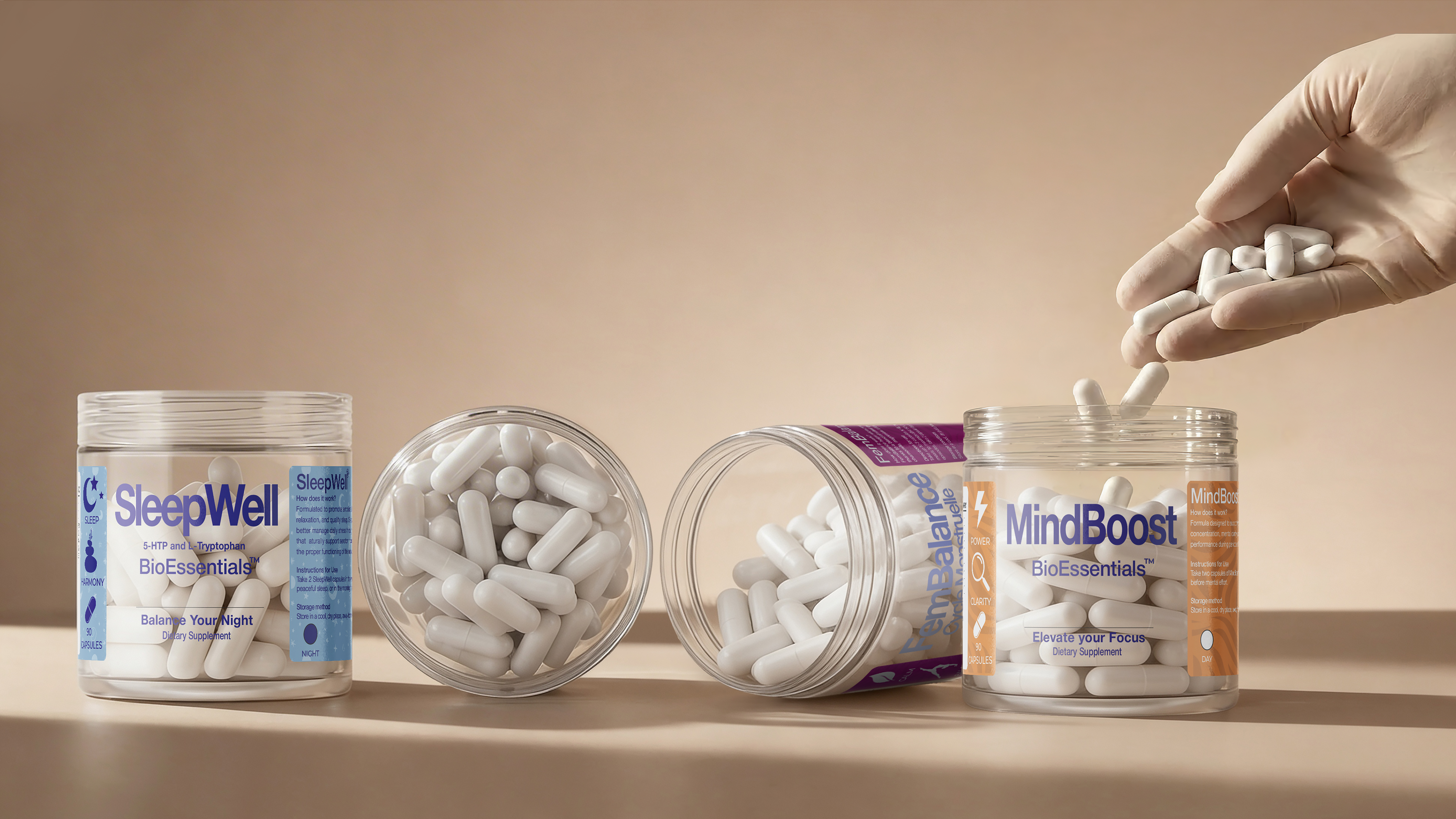
REVITAL® is our flagship cellular energy formula, combining ubiquinol CoQ10, KSM-66 ashwagandha, standardised shilajit, and B-complex vitamins for comprehensive mitochondrial support without stimulants. Beyond energy, our range includesMINDBOOST 1200 cognitive complex for focus and mental clarity, and Night Recovery liver support for overnight restoration. Every product at BioEssentials is transparently formulated, third-party...
Frequently asked questions
Do non-stimulant energy supplements really work?
Yes, when tailored to correct genuine nutrient deficiencies or support specific cellular needs, non-stimulant supplements are effective. Supplements work best when addressing real deficiencies or targeted physiological needs rather than masking fatigue temporarily.
Which is better for energy: B vitamins or CoQ10?
Both are essential for cellular energy production but work at different stages. B vitamins drive glycolysis and the citric acid cycle, while CoQ10 supports the electron transport chain; statin users and adults over 40 often benefit most from CoQ10 supplementation specifically.
How can I know if I have a nutrient deficiency?
The most reliable method is blood testing through your GP or a private laboratory. Testing for deficiencies in B12, iron, magnesium, and vitamin D gives you a precise, evidence-based starting point before spending money on supplements.
What certifications should I look for in a safe energy supplement?
Prioritise products certified by NSF International, USP, or ConsumerLab. Third-party certifications verify that a product contains what its label states and is free from contaminants and undisclosed stimulants.
Is it safe to take several supplements at once?
Always consult your healthcare provider before stacking supplements. Excess supplementation provides no additional benefit and increases the risk of overload, adverse interactions, and toxicity, particularly with fat-soluble vitamins and minerals like iron.
Recommended
- Multi-pathway liver support: the new standard — BioEssentials
- How to choose a beauty supplement from within: 5 criteria — BioEssentials
- Metabolic flexibility: why blood sugar matters more than calories — BioEssentials
- How to choose a focus supplement: 5 expert criteria — BioEssentials
- How to choose an immunity mushroom supplement: 5 criteria — BioEssentials
Our research and formulas have been recognized by leading media outlets such as Marie Claire.
Scientific References
- Clinical evidence on Withania somnifera efficacy and safety (PubMed)
- Mechanisms of action and bioavailability of Withania somnifera (PMC)
- Evidence-based review: Withania somnifera supplementation outcomes (PubMed)
These statements have not been evaluated by the Food and Drug Administration. BioEssentials products are food supplements intended to support general wellness and daily nutritional needs. They are not intended to diagnose, treat, cure, or prevent any disease. Always consult a healthcare professional before starting any new supplement if you are pregnant, breastfeeding, taking medication, or managing a health condition.


