
Suppléments premium : 5 critères pour optimiser votre santé
TL;DR:
Table of Contents
- Table of Contents
- Table of Contents
- Key Takeaways
- How supplements are regulated in the EU and UK {#regulation}
- What makes a supplement genuinely safe {#what-makes-safe}
- The quality markers that matter {#quality-markers}
- Real risks to understand {#real-risks}
- How BioEssentials approaches safety and quality {#bioessentials-approach}
- How to evaluate any supplement before buying {#how-to-evaluate}
- Explore science-backed solutions for your daily wellness goals
Table of Contents
- Table of Contents
- Key Takeaways
- How supplements are regulated in the EU and UK {#regulation}
- What makes a supplement genuinely safe {#what-makes-safe}
- The quality markers that matter {#quality-markers}
- Real risks to understand {#real-risks}
- How BioEssentials approaches safety and quality {#bioessentials-approach}
- How to evaluate any supplement before buying {#how-to-evaluate}
- Explore science-backed solutions for your daily wellness goals
Table of Contents
- Key Takeaways
- How supplements are regulated in the EU and UK {#regulation}
- What makes a supplement genuinely safe {#what-makes-safe}
- The quality markers that matter {#quality-markers}
- Real risks to understand {#real-risks}
- How BioEssentials approaches safety and quality {#bioessentials-approach}
- How to evaluate any supplement before buying {#how-to-evaluate}
- Explore science-backed solutions for your daily wellness goals
- Dietary supplements are safe when manufactured to verifiable quality standards — but the market is uneven, and the difference between a trustworthy product and an unsafe one comes down to third-party testing, transparent labelling, and GMP-aligned manufacturing.
- The key markers to look for: independent lab testing (such as Eurofins), full ingredient disclosure with exact doses, no proprietary blends, and Certificates of Analysis available on request.
- BioEssentials applies all of these standards to every product — vegan, non-GMO, gluten-free, independently tested by Eurofins, with CoA documentation available for every batch.
The honest answer to "are dietary supplements safe?" is: it depends entirely on who made them and how. The supplement market is large, partially regulated, and highly variable in quality. Some products are manufactured to pharmaceutical-grade standards with independent verification of every batch. Others are produced with minimal oversight, inaccurate labelling, and no external accountability. Knowing how to tell the difference is the most important skill a supplement consumer can develop.
Key Takeaways
| Point | Details |
|---|---|
| Regulation varies significantly | EU and UK regulations require food supplement compliance, but pre-market approval is not mandatory — post-market monitoring is the primary oversight mechanism |
| Third-party testing is the gold standard | Independent labs like Eurofins verify what is actually in a product — not just what the label says |
| Proprietary blends are a red flag | Hidden ingredient doses make it impossible to assess safety or efficacy |
| Most supplement risks are avoidable | Overdosing, drug interactions, and contamination risks are manageable when you choose transparently manufactured products |
How supplements are regulated in the EU and UK {#regulation}
In the European Union and United Kingdom, dietary supplements are regulated as food products rather than medicines. This means:
- Manufacturers must comply with food safety legislation and labelling requirements
- Products do not require clinical trial evidence before going to market
- Health claims are regulated — claims must be pre-approved under EU/UK nutrition and health claim regulations
- Post-market surveillance monitors for safety issues after products reach consumers
- Ingredient use is governed by positive lists for vitamins, minerals, and certain botanical extracts
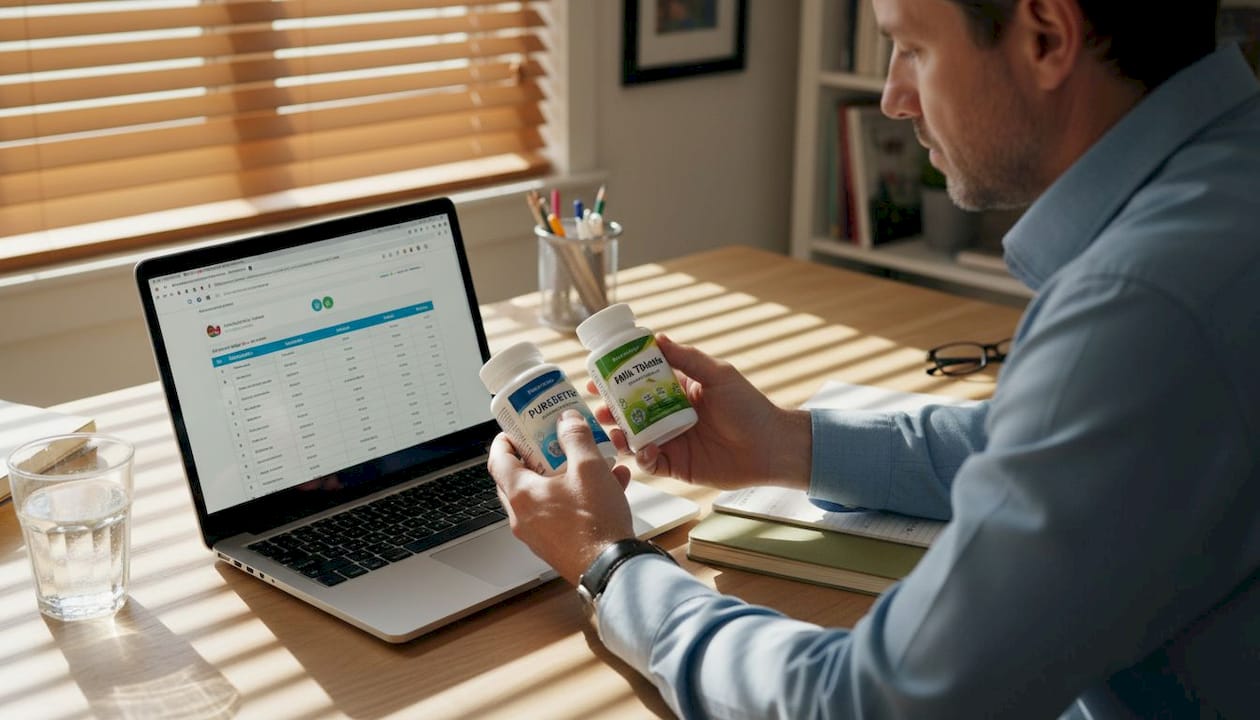
This regulatory framework provides meaningful consumer protection, but it also means the quality of manufacturing and the accuracy of labelling vary considerably between producers. Regulatory compliance sets a floor, not a ceiling. The brands that go beyond compliance — with independent third-party testing, full label transparency, and documented supply chain traceability — are meaningfully safer than those that meet only the minimum requirements.
What makes a supplement genuinely safe {#what-makes-safe}
Safety in supplements is not binary. It exists on a spectrum defined by three factors:
Ingredient safety— Is the ingredient safe at the dose used? Most well-established supplement ingredients (magnesium, B vitamins, zinc, probiotics, established plant extracts) have strong safety records at standard doses. Risk increases with high doses of fat-soluble vitamins (A, D, E, K — which accumulate in tissue), stimulants, novel botanical extracts with limited human research, and combinations that interact with medications.
Manufacturing safety— Is the product free from contaminants? Heavy metals, microbial contamination, undisclosed pharmaceutical ingredients, and incorrect doses have all been documented in supplement products. Independent testing is the only reliable way to verify manufacturing safety — self-certification is not sufficient.
Use safety— Is the product used appropriately? Even safe ingredients become risky when overdosed, combined incorrectly, or taken alongside medications they interact with.
The vast majority of supplement safety incidents involve one of these three factors — and most are preventable with informed product selection.
The quality markers that matter {#quality-markers}
These are the specific things to look for when evaluating a supplement's safety credentials:
Independent third-party testing
The most important marker. A third-party lab with no financial relationship to the manufacturer tests the product for:
- Potency accuracy (does it contain what the label states, at the stated dose?)
- Purity (is it free from heavy metals, pesticides, and microbial contamination?)
- Identity verification (is the ingredient actually what the label says it is?)
Laboratories likeEurofins— one of the world's leading analytical testing companies, headquartered in Luxembourg — provide the most credible independent verification available to European supplement consumers. A product tested by Eurofins has been verified by an accredited laboratory with no stake in the outcome.
Certificate of Analysis (CoA)
A CoA is the document produced by the testing laboratory confirming the results of batch analysis. Reputable brands make CoAs available on request for any product batch. If a brand cannot provide a CoA, support that as a significant warning sign.
Full label transparency
Every ingredient should be disclosed with its exact dose and specific form. Proprietary blends — which list ingredients collectively under a single weight — make it impossible to know whether any individual ingredient is present at a meaningful dose. Full transparency is not a premium feature; it is the minimum standard for informed consent.
GMP-aligned manufacturing
Good Manufacturing Practice (GMP) frameworks define standards for facility hygiene, equipment calibration, batch documentation, and quality control processes. Supplements produced in GMP-aligned facilities have documented processes for ensuring consistency and safety across every batch.
Clean-label credentials
Vegan, non-GMO, gluten-free, and lactose-free certifications reduce exposure to potential allergens and adulterants. They also reflect a manufacturing philosophy of minimal, high-purity ingredients rather than cost-driven formulation.
Real risks to understand {#real-risks}
Understanding actual supplement risks — rather than general anxiety about the category — allows for informed decisions rather than blanket avoidance.
Fat-soluble vitamin accumulation: Vitamins A, D, E, and K are stored in body fat and liver tissue. Sustained high-dose supplementation without blood level monitoring can lead to toxicity. Vitamin D in particular is frequently overdosed. Stay within evidence-based dose ranges and get annual levels tested.
Drug interactions: Several common supplement ingredients interact with prescription medications. Ginkgo Biloba and fish oil can potentiate blood thinners. NAC can interact with nitroglycerin. St John's Wort affects a wide range of drugs via cytochrome P450 enzymes. Always review interactions if you take regular prescription medication.
Stimulant-based products: Pre-workout, weight loss, and some energy supplements contain stimulants (caffeine, synephrine, others) at high doses. These carry cardiovascular risks at high doses and are not appropriate for everyone.
Contamination in unverified products: Products without independent testing may contain unlisted ingredients, incorrect doses, or contaminants. This risk is substantially mitigated by choosing brands with Eurofins or equivalent third-party verification.
Iron and calcium overdosing: Iron accumulation is toxic and potentially serious. Never supplement iron without confirmed deficiency via blood test. Excess calcium supplementation has been associated with cardiovascular risk — calcium from food is preferred over supplements for most adults.
How BioEssentials approaches safety and quality {#bioessentials-approach}
BioEssentials applies a consistent set of quality and safety standards across every product in its range.
Independent testing by Eurofins: Every batch is tested by Eurofins for potency, purity, and contaminant absence. This is not self-reported — it is independently verified by one of Europe's most respected analytical laboratories.
Certificates of Analysis: Available on request for any BioEssentials product. Documentation covering ingredient identity, dose accuracy, and absence of contaminants is maintained for every batch produced.
Full ingredient disclosure: No proprietary blends. Every ingredient, every dose, every specific form is disclosed on the label. What you see is exactly what you get.
GMP-aligned manufacturing: Every product is produced under Good Manufacturing Practice-aligned conditions, with documented quality control and traceability across the supply chain.
Clean-label formulation: All BioEssentials products are:
- ✅ Vegan
- ✅ Non-GMO
- ✅ Gluten-free
- ✅ Lactose-free
- ✅ Free from unnecessary fillers and synthetic binders
European formulation and distribution: Products are formulated and distributed within the EU and UK, in compliance with European food supplement regulations. No intercontinental supply chain, no customs uncertainty, no temperature exposure during long-distance transit.
Regulatory-compliant health claims: BioEssentials does not make disease-supportment, support, or medicinal claims. All product positioning follows approved nutrition and health claim language under European regulatory frameworks.
How to evaluate any supplement before buying {#how-to-evaluate}
Apply this checklist to any supplement you consider:
| Question | What to look for | Red flag |
|---|---|---|
| Is it third-party tested? | Named lab (e.g. Eurofins, NSF, Informed Sport) | "Lab-tested" with no named lab |
| Is the CoA available? | Available on request or published | Cannot or will not provide |
| Are all doses disclosed? | Individual ingredient doses listed | Proprietary blend with collective weight only |
| What form is the active ingredient? | Active, bioavailable forms specified | Generic "magnesium", "folate" without form |
| Is manufacturing documented? | GMP-aligned, traceable supply chain | No manufacturing information provided |
| Are claims compliant? | General wellness language | Disease supportment or support claims |
| Is it clean-label? | Vegan, non-GMO, allergen-free where relevant | Undisclosed excipients or fillers |
Explore science-backed solutions for your daily wellness goals
If you have read this far, you are already approaching supplementation more thoughtfully than most. The next step is finding products that match that standard. At BioEssentials, every formula is built...
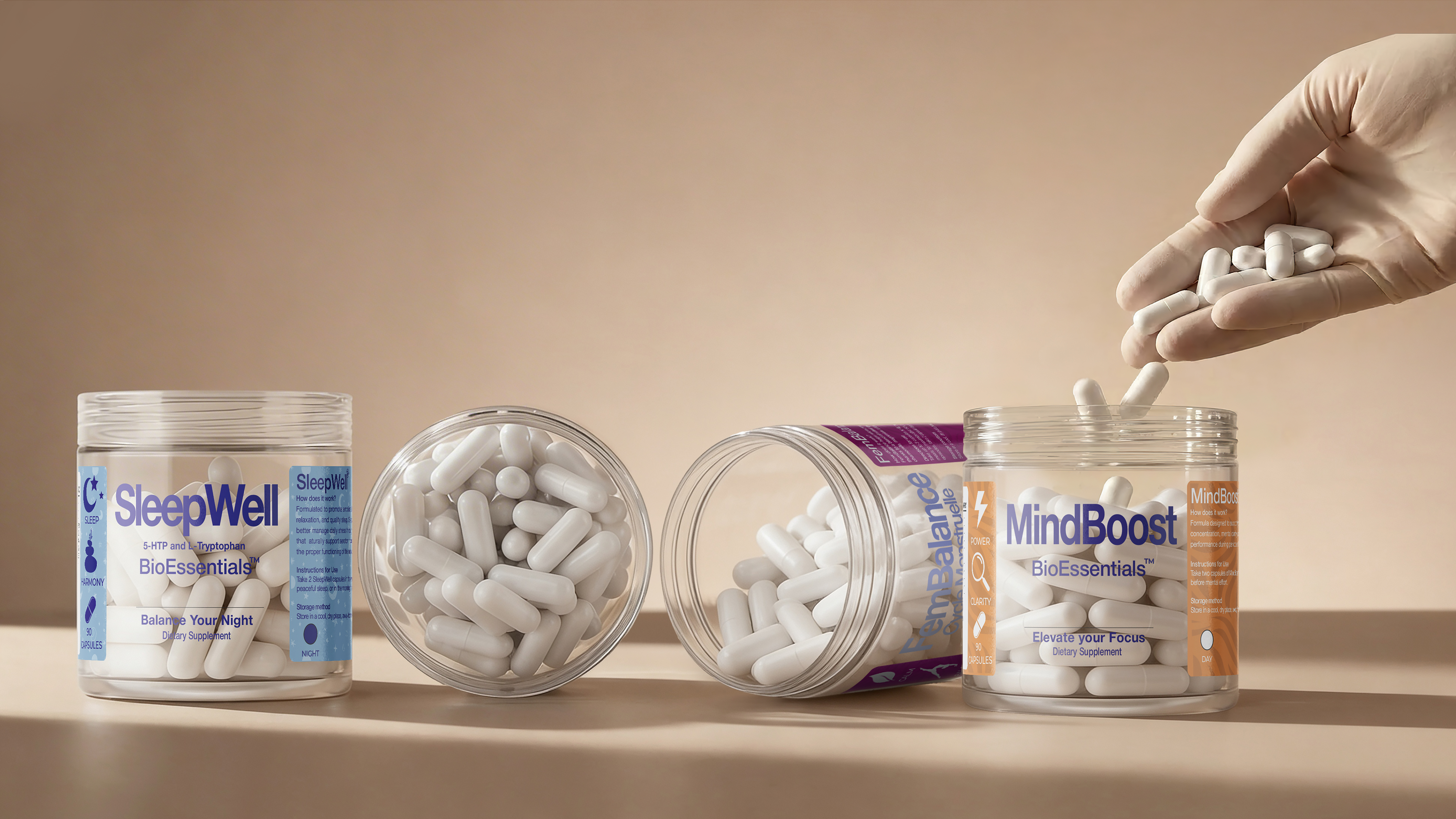
For daily liver and metabolic support,PUREliver support combines the key...Night Recovery offers a complementary...
Frequently asked questions {#faq}
Do I need a doctor's approval to take supplements?
For standard, well-established supplement ingredients at typical doses — magnesium, B vitamins, vitamin D, probiotics — most healthy adults do not require medical approval. However, you should always consult a healthcare professional if you take prescription medication (due to potential interactions), if you are pregnant or breastfeeding, if you have a diagnosed health condition, or if you plan to take high doses of any nutrient.
How do I know if a supplement is contaminated?
The only reliable way to verify a supplement is free from contamination is independent third-party testing. A Certificate of Analysis from a named laboratory like Eurofins confirms the product has been tested for heavy metals, microbial contamination, and ingredient identity. Without this documentation, you are relying on the manufacturer's self-assessment.
Is it safe to take multiple supplements together?
Most combinations of food supplements at standard doses are safe. The main risks in stacking are: overlapping ingredients that push you above safe upper limits, mineral competition (calcium and magnesium should be spaced apart), and interactions with prescription medications. Using complete formulas like those in the BioEssentials range — where ingredients are already combined at tested, harmonious doses — is generally safer than assembling many separate single-ingredient products.
Are European supplements safer than American supplements?
European and UK food supplement regulations require compliance with food safety legislation and approved health claim frameworks. US regulations under DSHEA give manufacturers somewhat more latitude before market. In practice, both markets contain high-quality and low-quality products — the most reliable indicator of safety is independent third-party testing, regardless of country of origin.
What is the most important thing to check on a supplement label?
The ingredient form. Two products with identical doses can have completely different outcomes depending on the form used. Magnesium oxide and magnesium bisglycinate both say "magnesium" — but one absorbs at roughly 4% and the other at roughly 80%. Checking the specific form of each active ingredient is the single most informative thing you can do when evaluating a supplement.

Cinq critères essentiels pour identifier les compléments alimentaires de qualité supérieure.
Frequently Asked Questions
Are all dietary supplements safe?
Safety depends entirely on manufacturing standards and quality control. Some products meet pharmaceutical-grade standards with independent verification, while others lack oversight and accurate labelling. Choose brands with third-party testing and transparent ingredient disclosure.
What is third-party testing and why does it matter?
Third-party testing by independent labs like Eurofins verifies what is actually in a product, not just what the label claims. This is the gold standard for ensuring product safety and efficacy.
What are proprietary blends and why should I avoid them?
Proprietary blends hide the exact doses of individual ingredients, making it impossible to assess safety or efficacy. Transparent products disclose all ingredients with precise dosages.
How do I know if a supplement is genuinely safe before buying?
Look for independent lab testing (Eurofins), full ingredient disclosure with exact doses, no proprietary blends, and available Certificates of Analysis. Request documentation directly from the manufacturer if not provided online.
Recommended
- Multi-pathway liver support: the new standard — BioEssentials
- How to choose the best daily liver support formula — BioEssentials
- How to choose a hair supplement: 5 criteria beyond biotin — BioEssentials
- How to choose the right magnesium supplement: the 5-form buyer's guide — BioEssentials
- How to choose a daily energy supplement: 5 criteria — BioEssentials
Our research and formulas have been recognized by leading media outlets such as Marie Claire.
Scientific References
- Clinical evidence on Dihydromyricetin efficacy and safety (PubMed)
- Mechanisms of action and bioavailability of Dihydromyricetin (PMC)
- Evidence-based review: Dihydromyricetin supplementation outcomes (PubMed)
These statements have not been evaluated by the Food and Drug Administration. BioEssentials products are food supplements intended to support general wellness and daily nutritional needs. They are not intended to diagnose, treat, cure, or prevent any disease. Always consult a healthcare professional before starting any new supplement if you are pregnant, breastfeeding, taking medication, or managing a health condition.


